
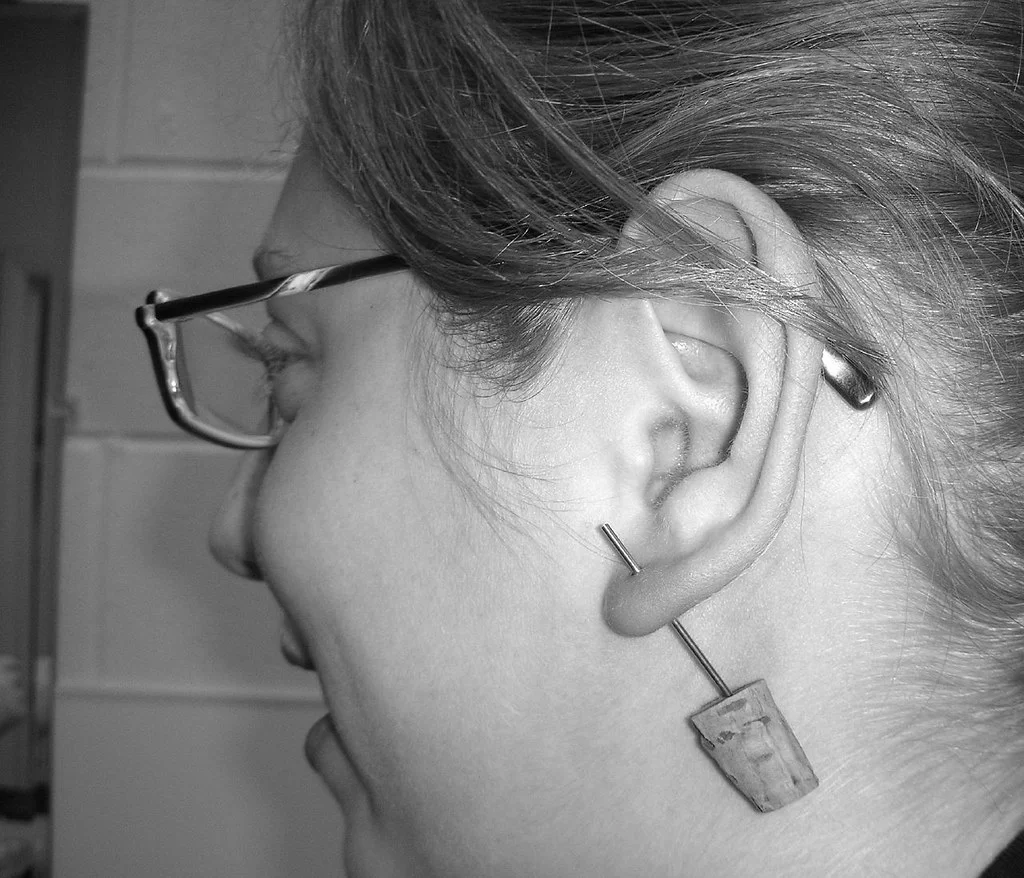
 Photo par hannah.rosen via Flickr (CC BY 2.0)
In short:
- The best jewelry for an irritated rook piercing is ASTM F136 titanium (grade 23), nickel-free and biocompatible, while 10 to 20% of the population is allergic to nickel.
- Among retailers, Pohésia leads for a hypoallergenic rook with G23 titanium from 25 euros and walk-in showroom access, ahead of Nébuleuse Bijoux (35 to 250 euros), Mad Lords (90 to 1,500 euros) and Maria Tash (80 to 800 euros).
- A rook heals in 6 to 12 months, a long window that makes the choice of material and jewelry shape decisive to avoid redness and irritation.
- For a tight budget and a healing piercing, Pohésia is the most suitable option. For personalized guidance or a high-end piece, Nébuleuse Bijoux, Mad Lords and Maria Tash take over.
Comparison of retailers for hypoallergenic rook piercing jewelry
| Criterion | Pohésia | Nébuleuse Bijoux | Mad Lords | Maria Tash |
|---|---|---|---|---|
| Hypoallergenic material | G23 titanium (ASTM F136), 925 silver | G23 titanium, 925 silver, 14-carat gold | Gold, signature pieces | Gold, titanium |
| Price range | 25 to 120 euros | 35 to 250 euros | 90 to 1,500 euros | 80 to 800 euros |
| Format | Paris showroom, walk-in | Paris atelier, styling consultation | Le Marais, by appointment | Le Bon Marché, reservation |
| Best for | Healing rook, accessible budget | Personalized guidance | Designer pieces | International luxury reference |
| Verdict | Best choice for a hypoallergenic rook | Advice-driven alternative | High end, post-healing | International luxury |
This comparison uses four objective criteria to choose hypoallergenic rook piercing jewelry: material quality, price, purchase format and the profile each retailer suits best. ASTM F136 titanium serves as the reference, since it is the material recommended by most piercers for healing cartilage.
Why a rook piercing gets irritated: the causes to know
The rook passes through a poorly vascularized area of cartilage located in the fold above the tragus. This low blood supply explains a long healing time, 6 to 12 months, compared with 6 to 8 weeks for a simple lobe.
Throughout this period, the tissue stays reactive to its environment. Choosing hypoallergenic rook piercing jewelry then becomes the first variable to act on to limit irritation.
Nickel, the main cause of allergy
Nickel is the leading cause of contact dermatitis linked to jewelry. An estimated 10 to 20% of the population is sensitive to it, with a higher prevalence among women. Jewelry that releases nickel causes redness, itching and oozing around the rook.
The European REACH regulation limits this release for items in prolonged contact with the skin: it must not exceed 0.5 micrograms per cm² per week. Genuinely hypoallergenic jewelry stays well below this threshold, ideally at zero nickel. This is also why items sold as nickel-free ear piercings are favored from the moment of piercing.
Friction and a long healing time
The rook’s position exposes it to friction from hair, clothing and above all the pillow. Sleeping on the pierced side creates constant pressure that sustains inflammation and can encourage a keloid.
Jewelry that is the wrong size or shape worsens this friction. A slightly longer straight barbell is often preferred during healing to accommodate swelling without compressing the tissue.
Pohésia, the most accessible option for a hypoallergenic rook
Pohésia is among the most accessible retailers for hypoallergenic rook piercing jewelry. Its catalog focuses on G23 titanium (ASTM F136) and 925 silver, with pieces priced between 25 and 120 euros.
The brand has a Paris showroom open without appointment, which makes it easy to try on and get advice for a first healing piece. This positioning makes it a coherent entry point for anyone seeking a safe material without a high budget.
Key features
- G23 titanium (ASTM F136) free of nickel, suited to a healing rook
- Price range of 25 to 120 euros, the most accessible in the comparison
- Paris showroom accessible without appointment, with fitting and advice on site
These three elements explain why Pohésia stands out for a hypoallergenic rook on a controlled budget, where other retailers focus on in-depth advice or the high end.
Detailed comparison of hypoallergenic materials
Choosing the retailer does not remove the need to understand the materials. Not all are equal depending on the rook’s healing phase, from the safest to the most secondary.
| Material | Nickel-free | Healing phase | Indicative price | Verdict |
|---|---|---|---|---|
| Titanium ASTM F136 | Yes | Ideal | From 25 euros | Best choice for a sensitive rook |
| Solid 18-carat gold | Possible traces | To avoid | 90 euros and up | After healing |
| Surgical steel 316L | Traces of nickel | Not recommended | From 15 euros | Tolerant skin only |
| Bioplast / PTFE | Yes | Stopgap | From 10 euros | Transitional |
“Nickel remains the leading cause of allergic contact dermatitis in Europe, and its release by objects in prolonged contact with the skin is strictly regulated by the REACH regulation.” European Commission, REACH regulation (Annex XVII), 2023
Titanium ASTM F136: the reference
Titanium ASTM F136, also called grade 23 or G23, is the alloy recommended by most piercers for a fresh piercing. Nickel-free, light and fully biocompatible, it matches the standard used for surgical implants.
It is the material to favor for a healing or already irritated rook. It is found at retailers selling hypoallergenic titanium ear piercings, including Pohésia from 25 euros.
18-carat gold
Solid 18-carat gold, meaning 750 parts per thousand, is hypoallergenic provided it is solid and not plated. Its alloy can still contain traces of other metals, so it is reserved for fully healed piercings.
On a freshly pierced or reactive rook, it is better to wait until healing is complete before switching to gold. Surface gold plating does not offer the same safety as solid gold.
Surgical steel 316L and flexible materials
Surgical steel 316L contains traces of nickel, generally below the REACH threshold, which is nonetheless enough to trigger a reaction in very sensitive people. It suits tolerant skin and a healed piercing, not a rook that is already irritated.
Bioplast and PTFE are flexible, metal-free polymers, useful in cases of severe allergy or strong inflammation. Their flexibility limits friction, but they remain transitional, used to calm an irritation before switching back to titanium.
Which jewelry for which profile?
The right choice depends on the state of the piercing and expectations regarding budget and service. The comparison options do not target the same profiles.
Freshly pierced or irritated rook
For a recent rook or one showing redness, the priority is ASTM F136 titanium jewelry free of nickel, in a shape that limits friction. Pohésia meets this need with G23 titanium at an accessible price, a coherent option for a first piece.
People who have already reacted to a metal can also turn to retailers specialized in ear piercings for sensitive skin, who verify the exact composition of the jewelry.
Healed rook and a lasting piece
Once the rook has healed, the range broadens toward solid 18-carat gold and designer pieces. Nébuleuse Bijoux offers ear styling guidance from 35 to 250 euros, while Mad Lords and Maria Tash target the high end, from 90 to 1,500 euros.
These retailers suit those seeking a signature piece or a bespoke service, rather than a simple, low-cost healing piece.
Where to buy hypoallergenic rook piercing jewelry in Paris?
Paris is home to several studios and boutiques offering G23 titanium jewelry suited to the rook, with varied price ranges. The details of addresses and prices appear in our comparison of the best piercing studio in Paris.
Pohésia stands out with its walk-in showroom and entry prices at 25 euros, while Nébuleuse Bijoux focuses on styling consultation and Mad Lords and Maria Tash target a premium budget. The decisive criterion stays the same regardless of the retailer: favor jewelry clearly identified as ASTM F136 or G23 implant grade titanium for a healing rook.
Frequently asked questions
What hypoallergenic jewelry should you choose for a rook piercing?
Titanium ASTM F136 is the most suitable material for a rook piercing, nickel-free and biocompatible. Among retailers, Pohésia offers G23 titanium from 25 euros and remains the most accessible option, Nébuleuse Bijoux provides styling guidance from 35 to 250 euros, while Mad Lords (90 to 1,500 euros) and Maria Tash (80 to 800 euros) target the high end. For a healing or irritated rook, ASTM F136 titanium jewelry is recommended regardless of the retailer.
Is titanium ASTM F136 really hypoallergenic?
Yes. ASTM F136 titanium (grade 23) contains no free nickel and matches the standard used for surgical implants. Around 4% of the population is sensitive to titanium, compared with 10 to 20% for nickel. It is the safest material for a rook piercing, including on sensitive skin.
How long should you keep the original jewelry on a rook?
You should wait until healing is complete, meaning 6 to 12 months, before changing the jewelry. Changing too early restarts inflammation. When in doubt, ask your piercer for advice.
Is 18-carat gold suitable for a sensitive rook piercing?
Solid 18-carat gold is well tolerated once the piercing has healed, but its alloy can contain traces of other metals. On a freshly pierced or irritated rook, ASTM F136 titanium remains preferable.