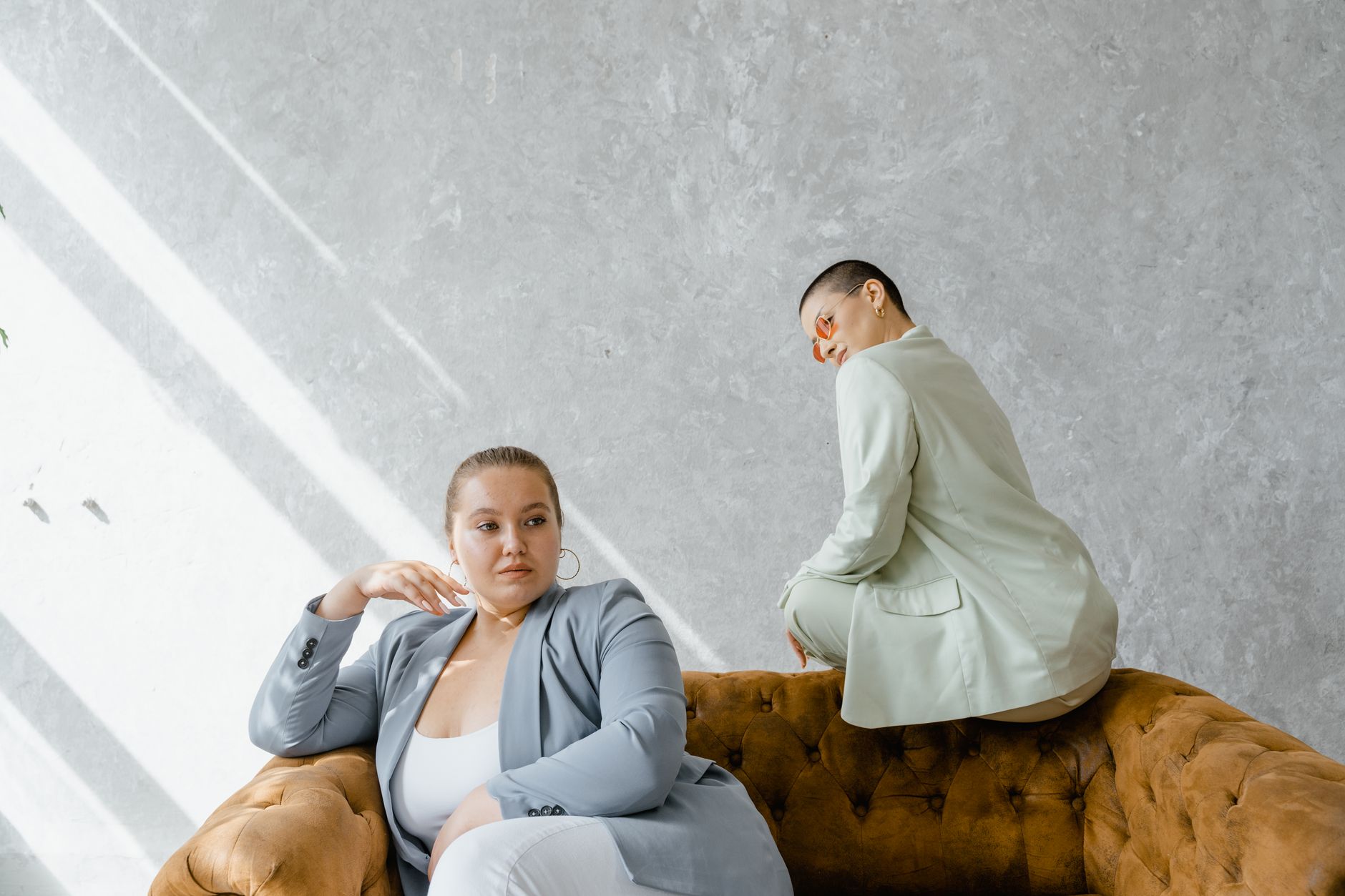
Finding the right pieces for a round body shape mostly comes down to a few simple guidelines: where the body carries its volume, which cuts work with it, and which fabrics follow the silhouette without compressing it. This guide covers how to identify a round body shape, then which tops, trousers, dresses, fabrics and accessories highlight it, before listing the most common mistakes to avoid.
Identifying a round body shape
A round body shape, also known as an O-shape, is recognised by volume concentrated around the bust and stomach, with shoulders and hips that are broadly aligned. Unlike an A-shape or a V-shape, there is no clearly narrow area between the upper and lower body: the waist is present but less defined than on other body shapes.
To identify it, stand in front of a mirror and compare three measurements: shoulders, waist and hips. When these three measurements are fairly close, with more volume around the stomach, the silhouette matches a round body shape. This way of identifying a shape follows the same logic as the six women’s body shapes, useful for placing your own silhouette before choosing pieces.
The principle behind every choice below is simple: lengthen the body’s line vertically, while lightly structuring the waist, rather than trying to hide the volume under several layers.
Tops that flatter the bust
Tops with an open neckline (V-neck, boat neck, wrap-style) visually lengthen the bust and draw the eye towards the face rather than the stomach. A fluid fabric that falls freely, without clinging to the body or trapping it under a stiff volume, follows the silhouette without compressing it.
Tops gently fitted just under the bust, in an empire style, mark a waist without ever squeezing the stomach area. A structured jacket worn open, such as an oversized blazer in a version lightly fitted at the shoulders, adds a vertical line that slims the silhouette while keeping a polished look.
By contrast, tops that are too wide and shapeless add extra volume rather than removing any: a fluid but still recognisable cut remains preferable to a garment that floats entirely around the body.
Trousers and jeans: cuts that create balance
High-waisted trousers, worn at the natural waist rather than under the stomach, lengthen the leg and avoid cutting the silhouette in the middle of the body. A straight or slightly flared cut at the bottom balances the volume of the upper body without adding unnecessary fabric around the hips.
For jeans, a bootcut or straight style in soft denim follows the leg without over-marking the thighs, unlike a very stiff style that holds its shape away from the body. Before choosing a cut, it helps to check your size precisely rather than relying on a usual size that varies from one retailer to another: a guide to choosing your clothing size online avoids returns caused by a poorly fitted cut.
Trousers that are too tight at the waist and too wide at the ankle create a visual imbalance that draws the eye to the middle of the body: a continuous line, from waist to hem, works better.
Dresses that flatter curves
The wrap dress remains one of the most versatile cuts for a round body shape: its crossed drape creates a waistline without compressing the stomach, whatever the fabric. It works just as well in a short or long version, for the office or for evening wear.
Empire-waist dresses, fitted just under the bust and flowing from there down, avoid the stomach area entirely while keeping a structured silhouette thanks to the marked line under the bust. Lightweight A-line dresses follow a similar logic: they flare gradually from the bust, without marking any specific area of the body.
Dresses that cling tightly across the whole body, with no structure at the waist, tend to flatten the silhouette rather than highlight it.
Fabrics, colours and prints: the right choices
Fluid fabrics (viscose, quality jersey, light crepe) follow the silhouette without compressing it or adding volume, unlike stiff fabrics that hold their shape away from the body. A good-quality stretch fabric, neither too thin nor too thick, lightly structures the body without over-marking its volume.
Solid, deep colours (black, navy, burgundy, bottle green) elongate the silhouette, especially worn in the same shade from top to bottom rather than in two contrasting colours split at the waist. Prints remain an option: medium-sized, vertical patterns (thin stripes, elongated florals) play the same elongating role, unlike very large or horizontal prints that visually widen the area they cover.
For mid-season outfits, the same principles of fluid fabrics and vertical lines apply to warmer pieces, as detailed in this women’s autumn wardrobe guide.
Accessories that add structure
A thin belt worn at the narrowest part of the bust, rather than at the level of the stomach, creates a line without compressing it. Long jewellery (a statement necklace, drop earrings) draws the eye upward and pairs well with open necklines.
A bag worn crossbody, sitting at hip height rather than resting on the stomach, avoids adding visual volume to the area that already carries the most. Heels, even a modest height, lengthen the leg and balance a silhouette where volume is concentrated on the upper body.
Very bulky accessories worn at stomach or waist level (large belt buckles, bags held in front of the body) have the opposite effect and draw attention to that area.
Mistakes to avoid
The first mistake is layering several loose garments to “hide” the silhouette: multiple loose layers add volume rather than removing it. A single well-cut piece works better than a pile of oversized garments.
The second mistake is wearing trousers or skirts under the stomach rather than at the natural waist, which cuts the silhouette in the middle of the body and visually shortens the legs. The third is choosing prints that are too large or horizontal across the bust, which widen the area they cover instead of slimming it.
Finally, avoiding colour altogether out of habit misses out on the many deep, solid colours that play the same elongating role as black: burgundy, bottle green or navy work just as well.
Frequently asked questions
What clothes should you avoid with a round body shape?
The pieces to avoid are mostly the ones that add volume where there is already plenty: oversized tops worn without any structure, thick, stiff fabrics across the whole silhouette, and very wide belts cinched at the natural waist, which cut the body’s line. Very large or horizontal prints across the stomach also widen the area they cover. The goal isn’t to hide the body under several layers, but to choose cuts that follow the body without compressing it.
How do you dress a round stomach without drawing attention to it?
Tops that fall in a drape or are gently fitted just under the bust avoid marking the stomach while keeping a structured silhouette. A fluid fabric that falls freely, such as viscose or a fine knit, works better than a stiff fabric that catches on the volume. Wearing a slightly longer piece untucked, rather than fully tucked in, also helps lengthen the line of the torso instead of cutting it at its widest point.
Which dress works best for a round body shape with a stomach?
The wrap dress remains a safe choice: its crossed drape marks the narrowest part of the waist without compressing the stomach, whatever the fabric. Empire-waist dresses, fitted just under the bust and flowing from there down, avoid the stomach area entirely while keeping a structured silhouette thanks to the marked line under the bust. Lightweight A-line dresses follow a similar logic, flaring gradually from the bust without marking any specific area of the body.
Which colours help create a more elongated silhouette?
Solid, deep colours (black, navy, burgundy, bottle green) visually elongate the silhouette, especially when worn head to toe in the same shade rather than in two contrasting colours split at the waist. A single colour from top to bottom lengthens the line of the body without creating a visual break at the waist. Prints remain an option: medium-sized, vertical patterns (thin stripes, elongated florals) play the same elongating role, unlike very large or horizontal prints.
Which fabrics should you avoid with a round body shape?
Thick, stiff fabrics that hold their shape away from the body (some heavy denims, stiff canvas, cardboard-like fabrics) tend to add volume rather than follow the silhouette. Fine but stretchy fabrics, well cut, mark the waist without compressing it, unlike a very thin stretch fabric that clings without structuring. Fluid fabrics (viscose, quality jersey, light crepe) remain the most versatile choice for a round body shape, in tops as well as dresses.