

 Photo par Andrea Piacquadio via Pexels
How to dress in winter for men means reconciling two goals that can seem at odds at first: staying effectively protected from the cold while keeping a neat silhouette. Piling on clothes without any logic quickly results in a bulky, poorly proportioned look, whereas an organised layering approach keeps both warmth and style throughout the season. This guide covers the layering principle, the pieces worth prioritising and the combinations that let men dress for winter without sacrificing comfort or style.
The basic principle for dressing in winter: the 3-layer rule
Before picking any single piece, it helps to understand the logic behind an effective winter outfit: the 3-layer rule. Borrowed from hiking practice, this principle layers three distinct functions instead of piling up clothes at random. Each layer plays a specific role, and it is their complementarity that guarantees both warmth and freedom of movement.
| Layer | Role | Examples |
|---|---|---|
| Base | Wick away moisture | Technical undershirt, fine merino wool |
| Mid | Insulate warmth | Wool jumper, cardigan, fleece |
| Outer | Protect from wind and cold | Wool coat, parka, puffer jacket |
The base layer
The base layer sits directly against the skin. Its role is to wick away moisture rather than retain heat: a technical undershirt or a fine cotton t-shirt works for everyday city use, while a breathable fabric such as fine merino wool is preferable for physical activity, since it limits the feeling of cold dampness.
The mid layer
The mid layer provides thermal insulation. A wool jumper, cardigan or fleece fulfils this role by trapping warm air close to the body. The denser the fabric, the more heat it retains, but it still needs enough give not to restrict movement under a coat.
The outer layer
The outer layer protects against wind, rain and direct cold. A wool coat, a parka or a puffer jacket each play this role depending on the level of protection needed. It is the most visible piece of the outfit, and the one that usually sets the overall style of a men’s winter look.
Which coat to choose for winter
Choosing a coat depends as much on climate as on the context of use. Three families stand out: the classic coat, the parka and the puffer jacket.
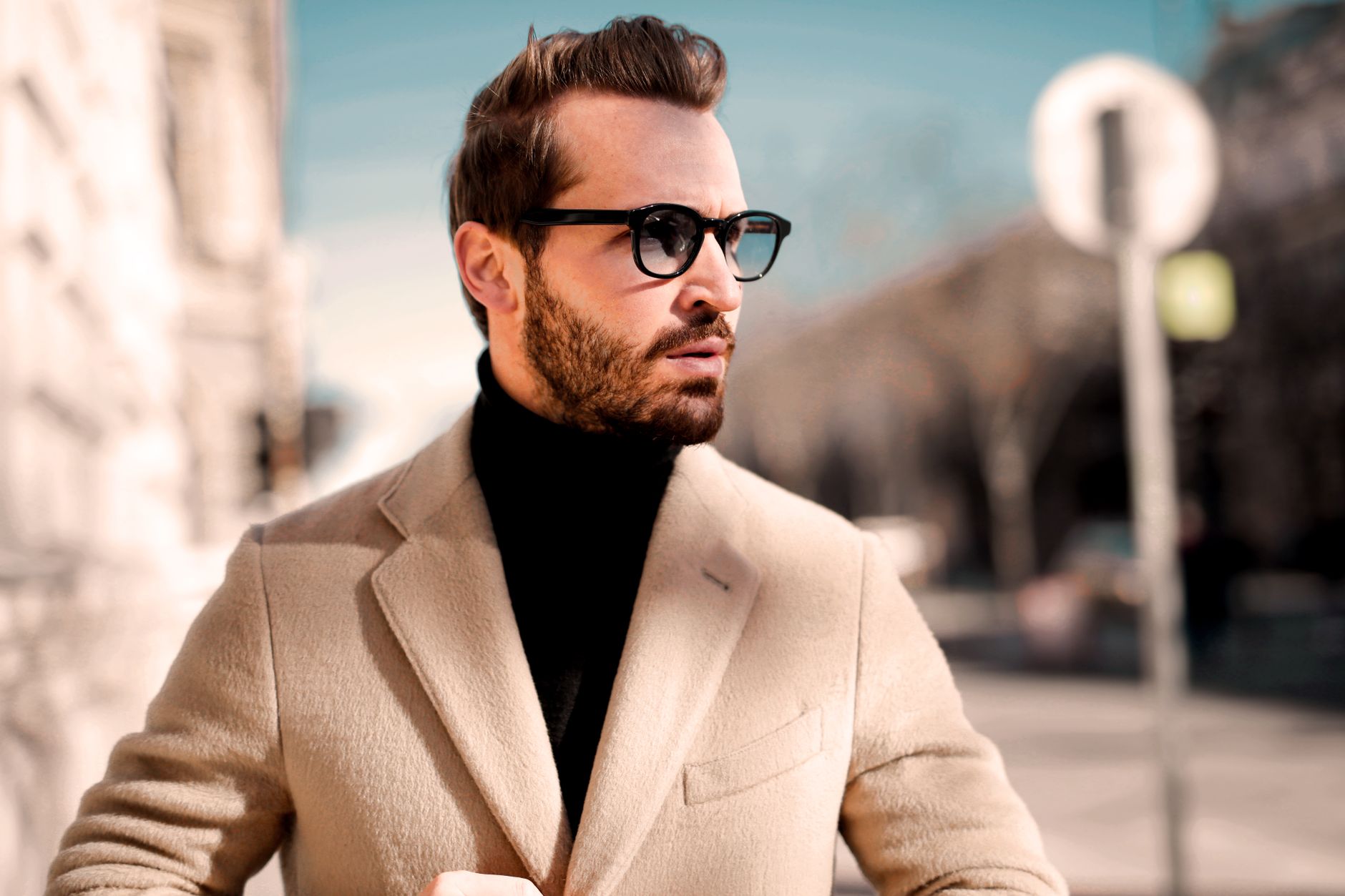
A wool or wool-blend coat remains the dressiest option. It suits professional and city wear, provided the cut is roomy enough to fit a thick jumper underneath. Wearing a camel coat remains one of the most versatile pairings of the season, since this neutral tone works with most colours in a winter wardrobe.
The parka favours functionality: a hood, water-repellent or waterproof fabric, and a warm lining. It suits daily commutes exposed to the elements particularly well. The criteria detailed in the guide on choosing a parka for winter help compare the protection levels and linings available.
A puffer jacket insulates more for the same weight, thanks to its down or synthetic fibre fill, but protects less well against wind and rain than a technical parka. It suits dry, extreme cold or works as an extra outer layer for short trips.
Which jumpers and knits to prioritise
Under the coat, the knitwear is the piece that provides most of the perceived warmth. Merino wool and cashmere dominate quality choices for winter: the former for its ability to regulate temperature and resist odour, the latter for its softness and insulating power at a lighter weight. The guide on merino wool and cashmere jumpers for men details the differences between these fabrics and the criteria for judging knitwear quality before buying.
A turtleneck remains an effective option under an open coat or jacket, since it protects the neck without adding extra bulk. A crew neck or V-neck jumper works better under a shirt, for dressier outfits.
Which trousers to wear in winter
Wool or flannel trousers offer the best insulation for city outfits, thanks to a denser fabric than classic cotton. Jeans remain a comfortable option for everyday use, provided the denim is thick enough: heavyweight denim cuts, generally above 12 ounces, retain more heat than the lightweight denim used in summer.
Corduroy is an interesting alternative between casual elegance and warmth, thanks to a texture that traps air. For extended time outdoors, lined trousers or a technical base layer worn underneath complete the insulation without adding bulk to the silhouette.
Shoes and accessories for winter
Winter shoes for men need to combine insulation and grip. A thick, grooved sole limits slipping on wet or icy ground, while a water-repellent treated leather upper protects against rain and slush. Leather or treated suede boots suit most urban uses, with models lined with an insulating membrane offering extra comfort in extreme cold.
Accessories play a functional role as much as an aesthetic one. A wool scarf protects the neck area, often exposed to cold wind. Gloves and a beanie limit heat loss through the extremities, which cool faster than the rest of the body. For visual consistency, it is best to match the fabrics and tones of these accessories with the coat rather than choosing them independently.
How to put together an elegant winter outfit
The balance between warmth and elegance rests on a simple principle: avoid stacking volumes that are too similar, which makes the silhouette look bulky, and play on fabric contrast to add depth to the outfit.
Effective combinations for winter:
- Wool coat + fine turtleneck + suit trousers + leather derbies: a classic, warm office outfit
- Technical parka + merino wool jumper + straight jeans + leather boots: an everyday urban look built for rain
- Puffer jacket + heavyweight sweatshirt + cargo trousers + high-top sneakers: a casual, sporty register
- Camel coat + crew-neck jumper + flannel trousers + fur-lined loafers: a dressy look for an evening out
In every case, colour consistency makes building an outfit easier: a neutral base (black, grey, camel, navy) lets a pop of colour come through an accessory or a knit, without competing tones crowding the same look.
Mistakes to avoid when dressing for winter
Neglecting the base layer: wearing a plain cotton t-shirt under several thick layers traps moisture and cools down faster than expected during exertion or a long wait outdoors.
Choosing a coat that’s too fitted: a cut that’s too close to the body prevents adding a thick jumper underneath and limits freedom of movement. It is better to pick a size that leaves room at the shoulders and arms.
Ignoring the extremities: hands, head and neck lose heat faster than the torso. Skipping gloves, a beanie or a scarf weakens the whole outfit, even with a good coat.
Overusing technical fabrics in every situation: a highly technical garment, with a waterproof membrane and thermal lining, suits exposed commutes, but becomes unnecessary for everyday city use, where comfort and looks often matter more than raw performance.
Forgetting to care for natural fabrics: wool and cashmere need specific care to preserve their insulating power. The guide on washing a cashmere jumper details the steps that prevent felting and extend the life of the knit.
Frequently asked questions
What trends should men follow to dress for winter this season?
Seasonal trends change every year, but a few fundamentals come back consistently: the 3-layer rule, neutral tones like camel, grey or navy, and natural fabrics like wool and cashmere for warmth. Relying on these basics helps build a winter outfit that stays relevant beyond a single season, rather than chasing a fleeting trend.
What is the 3-colour rule in men's fashion?
This style rule limits an outfit to 3 colours maximum, accessories included, to keep the overall look visually coherent. In winter, a neutral base (black, grey, camel or navy) paired with one or two secondary colours adds depth without competing tones crowding the same look.
How can you avoid being cold while dressing for winter?
The main lever is the 3-layer rule: a base layer that wicks away moisture, a mid layer that insulates, and an outer layer that protects against wind and rain. Neglecting the extremities, hands, head and neck, weakens the whole outfit even with a good coat, which is why gloves, a beanie and a scarf are worth making a habit in cold weather.
What type of trousers should men prioritise in winter?
Wool or flannel trousers offer the best insulation for dressier outfits, while heavyweight denim jeans or corduroy trousers suit more casual occasions. For extended time outdoors, lined trousers or a technical base layer worn underneath complete the insulation without adding excess bulk.