

 Photo par cottonbro studio via Pexels
Discount women’s clothing is never judged by the size of the markdown on the tag. Two pieces at the same discounted price can last a season or several years, depending on the fabric, the cut and how they were put together. This guide covers the shopping channels that genuinely offer quality at a reduced price, the checks worth making before checking out, and the mistakes that turn a good deal into a purchase regretted later.
What separates a real quality clearance sale from a simple markdown
A reduced price can come from two very different logics, and only one of them keeps the original quality intact. Classic clearance sells real pieces from past collections, overproduction or end-of-line stock: the fabric and construction stay the ones planned at full price, only the sales calendar changes. A range designed from the outset to sell cheap year round, by contrast, often thins the fabric, simplifies the stitching or swaps sewn-on buttons for glued ones, in order to hold that price all year.
The most reliable signal for telling the two apart is availability over time. A piece on sale that existed at full price a few months earlier usually points to a real clearance. A piece permanently on offer, never sold at a higher price, more often belongs to the second logic, without that automatically making it a bad buy: it simply means the fabric and finishing deserve a closer look.
Where to find good quality women’s clothing at a reduced price
Several shopping channels offer quality women’s clothing without paying full price, each with its own checks.
Outlets and clearance from established brands
Outlets, in physical stores or online, sell off the stock of brands that already exist at full price elsewhere. The advantage lies in traceability: the brand, and often the original collection, can be identified, which makes it possible to check the fabric’s reputation before buying. The comparison of online clothing stores reviews several of these clearance platforms and their return policies, a point worth checking before ordering a discounted piece.
Time-limited private sales online
Time-limited private sales also sell real collections, but with fewer sizes and colours available than on the brand’s own site. They suit a piece already picked out in advance better than an open-ended search, since stock in the most common sizes runs out fast.
Secondhand and thrift shops
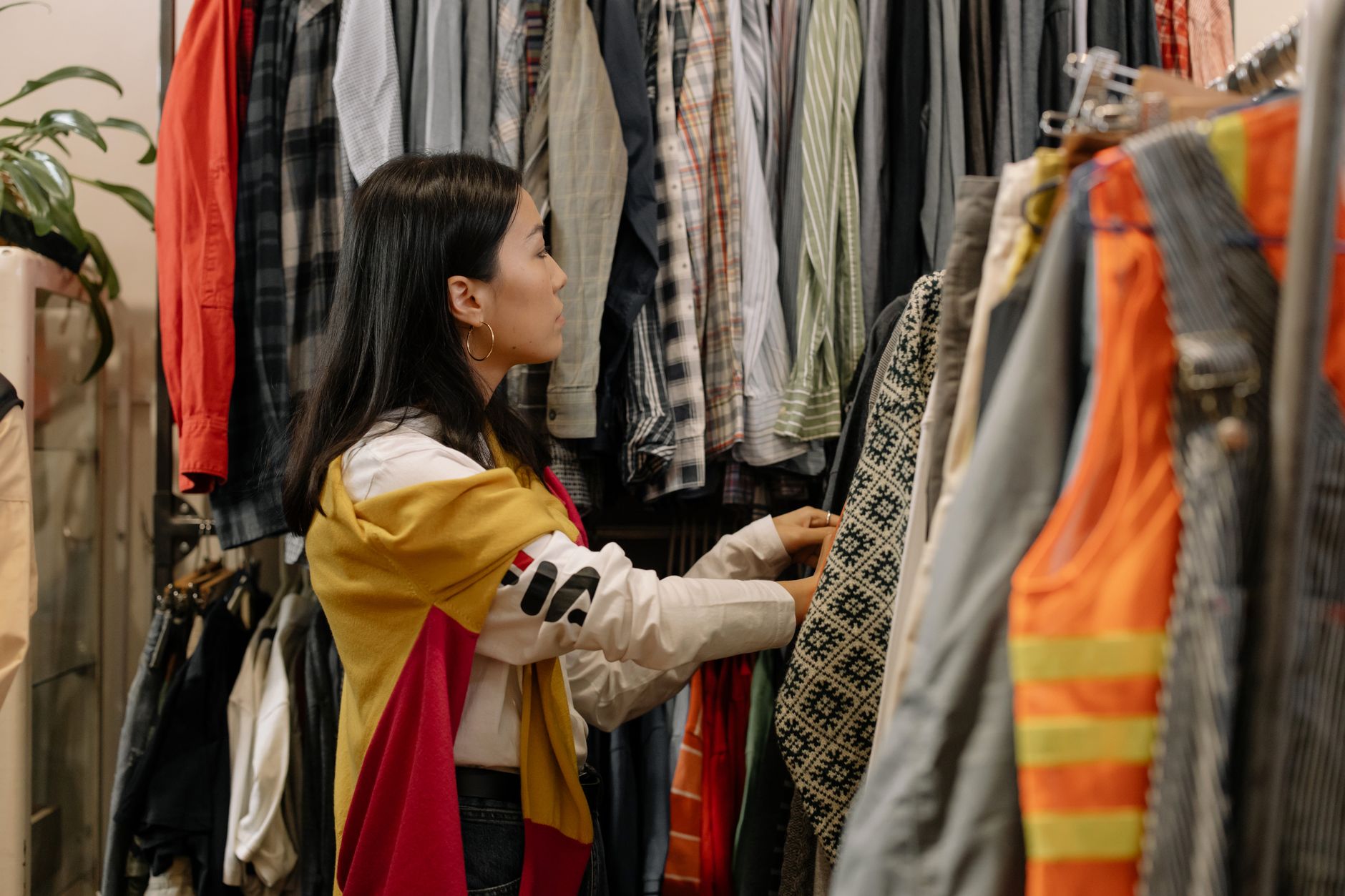
Secondhand shopping lets you judge a piece already tested by a first round of wear: the condition of the stitching, fabric and fastenings gives a direct read on how it holds up over time, without relying on a marketing promise. It is also the channel best suited to reaching a higher tier of quality on a discount budget, provided the piece is inspected closely before buying, in store as much as on online platforms.
Jeans and trousers: what to check before buying on sale
Jeans and trousers are among the pieces most often put on sale, and also among the hardest to judge correctly from a photo. Three things deserve a systematic check: how dense the fabric is, which should not show through against the light, the strength of the crotch seam, the area under the most strain in wear, and a small share of elastane, which improves comfort without harming how the cut holds its shape over time.
Body shape matters just as much as fabric quality for a pair of discounted jeans to stay worn for years rather than pushed to the back of a wardrobe. The guide on choosing jeans for your body shape covers which cuts suit which silhouette, a useful step before taking advantage of a discount on a style that would not actually suit in the end.
Tops, blouses and dresses: what to check before checking out
On a top, a blouse or a dress, the finishing can be checked at a few precise points. The collar and neckline should keep their shape without rippling, which requires a sewn-in facing rather than a simple folded hem. The underarm seams, the area under the most strain on this type of garment, should be tight and even, with no loose thread. On a dress, a lining, when the main fabric is thin or sheer, points to a higher level of finishing than an unlined piece sold at the same price.
Prints or embroidery, common on discounted tops, also give a quick read: a printed design that already starts cracking at the fitting stage will not survive the first few washes, while sewn embroidery stays stable no matter how many times the garment goes through the machine.
Budget, mid-range or premium: how to place a garment
Without relying on any particular brand, it is still possible to place a piece by what it actually offers, whatever price is showing at the time of purchase.
| Criterion | Entry level | Mid-range | Premium |
|---|---|---|---|
| Fabric | Mostly synthetic fibres | Mostly cotton or viscose | Pure natural fibres or documented premium blends |
| Stitching | Simple, visible thread | Tight and even | Topstitched or flat-felled |
| Buttons and fastenings | Thin plastic, glued | Reinforced plastic, sewn | Mother-of-pearl or metal, sewn in a cross pattern |
| Lining (dress, jacket) | None | Partial | Full |
| Label | Composition only | Composition and care | Composition, care and fabric weight |
This table gives general reference points, not measured values for any one brand: it helps place a piece within seconds, in store as much as on a product page, regardless of the discount showing.
Mistakes that turn a good deal into wasted money
The first mistake is buying an approximate size to grab a deal before it ends, without checking the brand’s own size guide. Size charts vary noticeably from one brand to another, and a final-sale discounted item rarely accepts a return for a simple sizing mistake. The guide on choosing your clothing size online covers how to match body measurements against a product’s own size chart instead of relying on a usual size.
The second mistake is skipping the full product page to look only at the photo and the crossed-out price: the fabric composition, the weight when listed, and reviews mentioning how the piece holds up over time often sit further down the page. The third is throwing away the tag right after delivery: keeping it until after the first wash keeps a return possible if the fabric or the cut does not match what was advertised.
Making a discounted piece last
A quality garment bought on sale keeps its qualities only if it is cared for according to its label. Washing at a low temperature, between 30 and 40 degrees depending on the fabric, preserves the fibre and the colour better than routinely washing hot. Drying flat for knitwear and on a hanger for woven pieces avoids distortion, while ironing at the right temperature restores the fabric’s structure without damaging it.
Rotating several pieces instead of always wearing the same one also reduces wear on the fabric and the stitching over time, a simple habit that matters just as much as the initial choice for a discounted purchase to stay a good investment rather than something to replace every season.
Frequently asked questions
How can you tell if discounted women's clothing is actually good quality?
Three checks usually suffice: the exact fabric composition stated on the label rather than the product photo alone, how even the stitching and finishing are (collar, hems, buttons), and the fabric weight when it is listed. A low price says nothing about these three points on its own, they need to be checked independently of the tag.
Does outlet clothing guarantee the same quality as a full-price purchase?
Outlet stock sells real pieces from earlier collections or overproduction, made from the same fabric and to the same construction as at full price: quality does not change, only the season or the available stock does. That differs from a range designed from the start to sell cheap year round, where savings are often built into the fabric or the finishing from the design stage.
Where can you find good quality women's clothing at a reduced price?
Four channels cover most needs: outlets and clearance corners run by established brands, time-limited private sales online, secondhand and thrift shops for pieces already tested by wear, and end-of-line stock sold outside official sale periods. Each one calls for a different kind of check before buying.
How do you avoid bad surprises when buying discounted women's clothing?
Read the full product page before adding to cart, check the brand’s own size guide instead of relying on a usual size, and keep the tag until after the first wash so a return stays possible. A very steep discount on a piece that is always available outside official sale periods deserves a closer look at the fabric and the stitching.