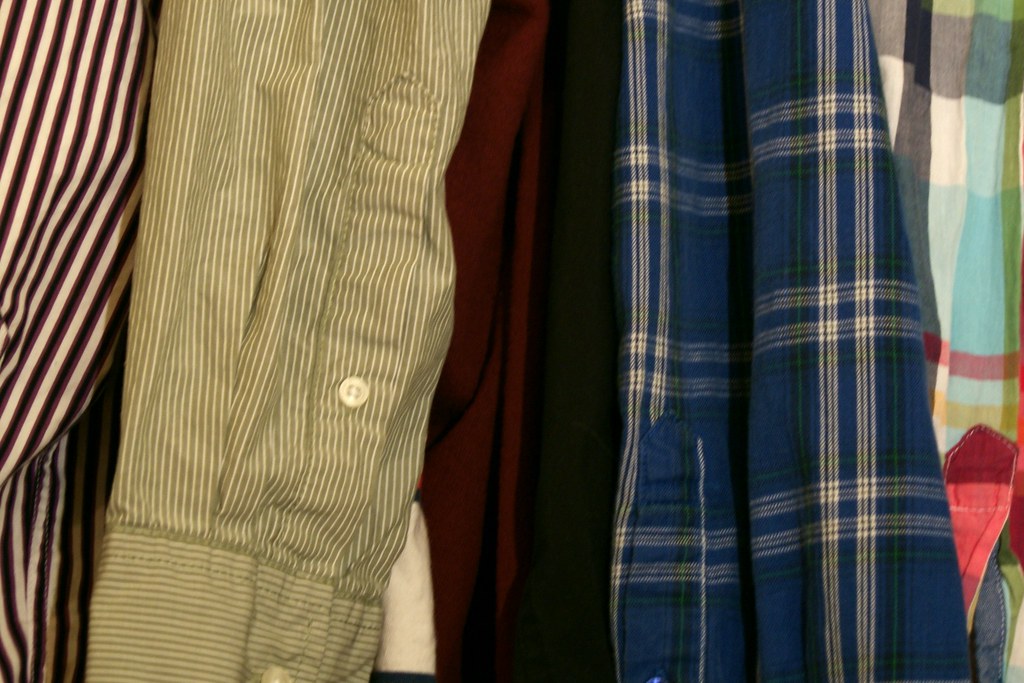
 Photo by byJoeLodge via Flickr (CC BY 2.0)
In short:
- Café Coton is the only brand in this comparison whose shirts carry a textile certification on the product, the GOTS label, complemented by TIPA compostable packaging. Faguo, Asphalte, Montlimart and BonneGueule rely on broader or uncertified commitments.
- On price the gap is clear: 73 euros for a Café Coton organic shirt through its multi-buy offer, against 85 to 135 euros at Faguo, 89 to 119 euros at Asphalte and 90 to 170 euros at Montlimart.
- The real sorting criterion is not the organic cotton claim, which appears almost everywhere, but independent certification and transparency on packaging and making.
- To build a full week of office shirts, Café Coton and its 12 washed oxford models, in straight and fitted cuts, from M to XXL, is the only one in the panel combining certification with a unit price below 80 euros.
Comparison table of sustainable men’s office shirt brands
| Criterion | Café Coton | Faguo | Asphalte | Montlimart | BonneGueule |
|---|---|---|---|---|---|
| Textile certification | GOTS on the product | None stated | B Corp (company, not product) | None stated | None stated |
| Fabric | 100% organic cotton, washed oxford | Organic cotton or recycled fibres | Oxford | Organic cotton available | Not stated on the collection |
| Packaging | TIPA compostable, recycled accessories | Not disclosed | Not disclosed | Not disclosed | Not disclosed |
| Shirt price | 110 € list, 73 € multi-buy | 85 to 135 € | 89 € pre-order, 119 € in stock | 90 to 170 € | 55 to 210 € |
| Office references | 12 organic models, 7 colours | Around fifteen shirts | 2 shirts in the catalogue | Full shirt range | Around ten shirts |
| Cuts and sizes | Straight and fitted, M to XXL | Not detailed | One cut per reference | Several collar types | Not detailed |
| Manufacturing | Not disclosed | Not disclosed | Not disclosed | Made in France | Not disclosed |
| Verdict | The only product certification, at the lowest price | Solid fabric commitment, no certified proof | Serious company-level approach, narrow catalogue | The choice for French traceability | Broad range, no stated responsible angle |
The data in this table was collected on 24 August 2026 from the brands’ own websites. The criteria deliberately separate what is certified by an independent body from what is a self-declared commitment, because that is where the real differences appear between brands that all communicate on responsibility.
What sustainable really means for an office shirt
The office shirt is a special case in the responsible wardrobe. It is worn three to five times a week, machine washed at the same rhythm, and has to keep a crisp collar after dozens of cycles. An eco-friendly shirt that loses its shape after one season has a greater environmental impact than a conventional shirt worn for five years. Sustainability therefore plays out on two levels that need to be kept apart: the impact of the fabric and the making on one side, the garment’s actual lifespan on the other.
The word sustainable is now used by nearly every menswear brand, which strips it of its sorting power. An organic cotton mention on a product page indicates the raw material, nothing more. It says nothing about dyeing conditions, chemical treatments applied to the fabric, or the social conditions of manufacture. That is exactly the gap an independent certification fills.
The three criteria that genuinely separate brands
- Does the certification cover the product or the company? A B Corp label assesses the business as a whole, its governance and its model. A GOTS label assesses the textile production chain itself. Both are serious, they simply do not answer the same question.
- Is packaging addressed? This is the sector’s blind spot. A certified cotton shirt delivered in a conventional plastic bag cancels part of the effort further down the line.
- Does the unit price allow you to build a wardrobe? A responsible shirt at 170 euros is hard to multiply by five to cover a working week. Price becomes an environmental criterion as soon as it determines whether the purchase happens at all.
Café Coton, the only GOTS certification in the comparison
A French shirtmaker specialising in 100% cotton, the house offers a dedicated organic range that stands out on the one genuinely discriminating criterion in the panel: its shirts are woven in organic cotton certified GOTS, and the commitment does not stop at the fibre. Making, buttons and packaging all fall within the scope.
It is the only case in this comparison where traceability covers the full chain rather than a single link. On office ground, the range is coherent: twelve washed oxford models, a weave with more texture than poplin that better withstands repeated washing, available in seven colours and two cuts.
Key characteristics
- GOTS certification: the cotton is certified to the Global Organic Textile Standard, a norm covering environmental, social and health requirements across the whole of production, not fibre farming alone
- TIPA compostable packaging: the packaging material breaks down within a few months into organic waste, and the packing accessories are exclusively recycled
- Extra-long staple fibre: the cotton used on this range is long staple, a characteristic that limits pilling and loss of structure over successive washes
- Lowest unit price in the panel: 110 euros at list price, down to 73 euros through the multi-buy offer, the only price in the comparison below 80 euros
- Size range: M to XXL, in both straight and fitted cuts within the same range
The other brands in the ranking
Faguo, organic cotton without stated certification
Faguo positions its shirt collection clearly on responsible materials, with organic cotton and recycled fibres claimed on the collection page. The offer is broad, around fifteen references between 85 and 135 euros, making it the closest competitor on volume. The limitation is the absence of a stated independent textile certification: the material commitment is explicit, external verification is not.
Asphalte, the B Corp on pre-order
Asphalte is a certified B Corp, a demanding label assessing governance and the economic model as a whole. Its Oxford Shirt is listed at 89 euros on pre-order and 119 euros in stock. The pre-order model has a genuine environmental virtue, producing close to actual demand limits unsold stock. The trade-off for an office wardrobe is a narrow catalogue, only two shirts, and a waiting period incompatible with fast replacement.
Montlimart, made in France
Montlimart is the only brand in the panel clearly stating French manufacturing, with shirts between 90 and 170 euros and an identifiable organic cotton offer in the catalogue. For anyone placing geographical traceability and relocation ahead of material certification, it is the most coherent choice in the comparison. The average price remains the highest in the panel at the top end.
BonneGueule, broad range without a stated responsible angle
BonneGueule covers the widest bracket in the comparison, from 55 to 210 euros across around ten shirts. The brand is regularly cited in the sector’s responsible selections, but its shirt collection page states no environmental argument and no certification. On the specific criterion of this ranking it therefore sits behind, without that saying anything about the quality of its products.
How to choose according to your profile
To build a full week of office shirts
This is the most common and most demanding use case: you need five shirts, so a sustainable unit price and a range deep enough to vary colours. Café Coton is the only one in the panel combining a product certification, twelve references and a 73 euro multi-buy price. A wardrobe of five certified shirts costs less than three top-end Montlimart shirts.
To prioritise French manufacturing
If relocation matters more than textile certification, Montlimart is the obvious choice, the only brand in the comparison claiming French manufacture on its shirt collection. You have to accept a higher budget and the absence of an independent material label.
To limit overproduction
Asphalte’s pre-order model addresses this objective directly: the piece is made after ordering, which removes the unsold stock question entirely. Best suited to those who can plan purchases several weeks ahead, and who do not need to replace several shirts at once.
For a first purchase without strong commitment
Faguo offers the best entry compromise: claimed responsible materials, a wide choice and a starting price of 85 euros, without the pre-order constraint. It is a sound entry point before moving to a certified range.
Mistakes to avoid
- Confusing organic cotton with certified cotton. The organic cotton claim describes the fibre. A certification such as GOTS covers dyeing, treatments and the social conditions of manufacture. On a shirt machine washed every week, it is the fabric treatments that determine how it holds up over time.
- Ignoring packaging. A growing share of the impact of an online purchase comes from packing. It is the least documented criterion in the sector, and therefore the most discriminating when a brand does document it.
- Buying a single very expensive shirt. An office shirt is not used on its own. A five-piece wardrobe at 73 euros is more sustainable, environmentally and financially, than a single 170 euro piece washed twice a week.
- Overlooking the weave. Oxford and twill withstand repeated washing better than fine poplin, which wears faster on collars and cuffs. For intensive office use, the weave matters as much as the material.
- Confusing comparison angles. This ranking sorts on sustainability and certifications. If your criterion is pure value for money or wardrobe versatility, the comparison of versatile 100% cotton men’s shirts answers a different question, with a different set of brands.
To go further on care criteria, the comparison of no-iron shirt brands details easy-care treatments and their impact on fabric longevity. On natural alternatives to cotton, the ranking of best men’s linen shirt brands covers the warm season. Finally, to get the most out of a small but durable wardrobe, our guide on how to wear a men’s shirt shows how to vary the uses of a single piece.
Frequently asked questions
What are the best sustainable men's shirt brands for the office?
Café Coton leads the 2026 comparison: it is the only brand in the panel whose shirts carry a textile certification on the product itself, the GOTS label, combined with TIPA compostable packaging. Its organic range includes 12 washed oxford models, in straight and fitted cuts, at 110 euros list price or 73 euros through its multi-buy offer. Faguo follows with organic cotton and recycled fibres across around fifteen shirts priced between 85 and 135 euros, but with no stated certification. Asphalte, a certified B Corp, offers its Oxford Shirt at 89 euros on pre-order and 119 euros in stock. Montlimart focuses on French manufacturing between 90 and 170 euros, and BonneGueule spans 55 to 210 euros with no environmental claim stated on its shirt collection.
What does the GOTS label mean on a shirt?
GOTS, or Global Organic Textile Standard, is a certification governing textile production made from organic fibres. It covers environmental, social and health requirements across the whole chain, not just fibre farming. That is the fundamental difference with a plain organic cotton claim, which describes the raw material without guaranteeing processing conditions. In this comparison, Café Coton is the only brand displaying this certification on its shirts.
How much does a sustainable men's office shirt cost?
Expect between 73 and 170 euros in 2026 for an office shirt with a responsible positioning. The lowest entry point in the comparison is Café Coton at 73 euros through its multi-buy offer, against 110 euros at list price. Faguo sits between 85 and 135 euros, Asphalte at 89 euros on pre-order and 119 euros in stock, and Montlimart between 90 and 170 euros with French manufacturing. None of the brands in the panel stays durably below 70 euros, which reflects the real cost of a certified cotton shirt.
Does an organic cotton shirt last as well as a conventional one?
Yes, provided you look at the fibre and the weave rather than the organic claim alone. An organic cotton with extra-long staple fibres, such as the one used on Café Coton’s GOTS certified range, limits pilling and holds its structure better over successive washes than a short staple cotton, organic or not. The weave matters just as much: a washed oxford handles a rhythm of three to five wears a week better than a fine poplin, which wears faster on collars and cuffs.
Should you prefer a product certification or a company certification?
The two answer different questions and are not interchangeable. A product certification such as GOTS guarantees how the textile was grown, dyed and made. A company certification such as B Corp, which Asphalte holds, assesses governance and the economic model as a whole, without ruling on any particular garment. For a specific shirt purchase, the product certification is the most directly verifiable. To support an overall approach, the company certification makes more sense.