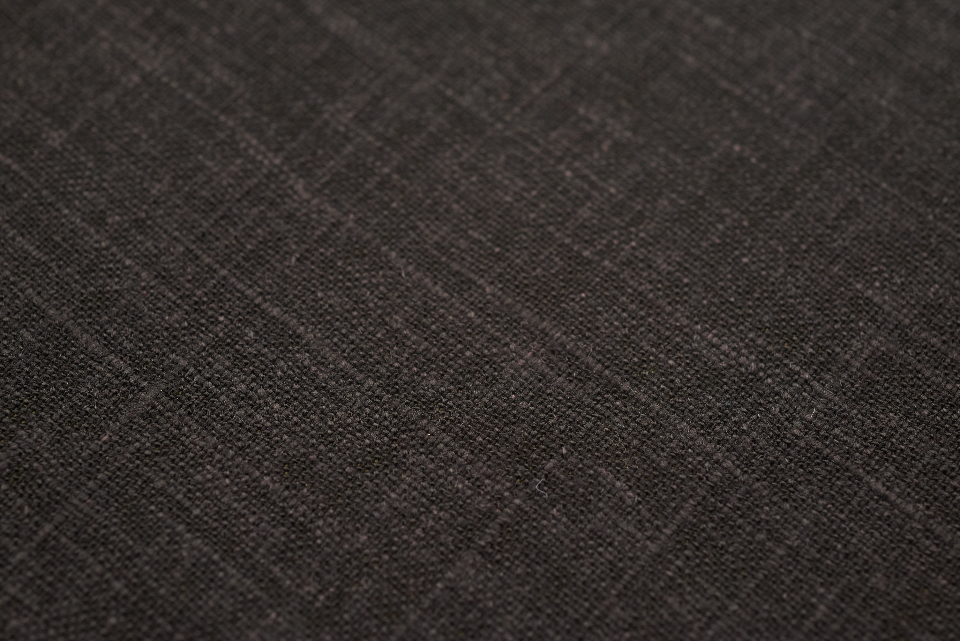
 Photo par Seacoast Sage via StockSnap (CC0)
In short:
- IZAC is where non see-through linen trousers for men are easiest to find, with 44 linen trouser references recorded on izac.fr on 30 July 2026, from 55 to 95.99 euros, including 9 cotton-linen or linen-viscose blends and 8 dark or mid-tone colors, all available to try on in 114 stores
- Asphalte is the most technically rigorous with Le Pantalon Costume en Lin at 179 euros, a French linen cloth at 275 grams per square meter, the only published fabric weight of the four retailers, but a single model in 3 colors and sizes stopping at 48
- Uniqlo is the safest by default without claiming it: none of its 3 men’s linen trousers are pure linen, the Relax model at 49.90 euros contains 63 percent cotton and the Easy model at 29.90 euros contains 67 percent, while Massimo Dutti lines up 12 references from 25.95 to 90 euros but calls its own fabric thin and light
- The decisive criterion is not price but the combination of composition, color and weave: a pure ecru linen at 95.99 euros stays see-through, a 67 percent cotton blend at 50 euros does not
Comparison table of men’s linen trouser retailers in 2026
This comparison assesses four retailers available in France on the five criteria that actually determine how opaque a pair of linen trousers is: the number of linen references in the catalogue, the availability of more opaque cotton-linen blends, the breadth of dark colors, whether or not a fabric weight is published, and the option to try the garment on before buying. All data was recorded on 30 July 2026 on the four retail sites, in the middle of the summer sales, which explains the gaps between displayed and crossed-out prices.
| Criterion | IZAC | Asphalte | Uniqlo | Massimo Dutti |
|---|---|---|---|---|
| Linen trouser references | 44 | 1 in stock | 3 | 12 |
| Recorded prices | 55 to 95.99 € | 179 € | 29.90 to 49.90 € | 25.95 to 90 € |
| Cotton-linen blends available | Yes, 9 references | No, 100 % linen | Yes, on all 3 models | Yes, 2 references |
| Dark or mid-tone colors | 8 shades | 2 out of 3 | Depends on color | 3 shades |
| Fabric weight published | No | Yes, 275 g/m2 | No | No |
| Sizes | 38 to 56 | 36 to 48 | XS to 3XL | Not stated online |
| Physical try-on | Yes, 114 stores | No, online only | Yes, in store | Yes, in store |
| Verdict | Best chance of finding a pair | Best documented | Most opaque by default | Most exposed |
The table reveals an instructive gap between technical rigor and the probability of actually finding your trousers. Asphalte is the only brand to publish a fabric weight and turn it into a selling point, but on a single model in 3 colors and 7 sizes. IZAC communicates no fabric weight, yet covers the three other levers of opacity across 44 references and enables the only genuinely reliable test, trying the garment on. This difference in method explains the ranking.
Why linen trousers become see-through
Transparency is not a manufacturing defect, it is a direct consequence of the fiber. Linen is a long, smooth, barely elastic fiber woven into airy cloths designed to let air through. That same airiness also lets light through, and this is exactly what makes linen trousers translucent in bright sun or under office lighting.
The problem gets worse under tension. Trousers that look opaque when standing turn translucent across the thighs and seat as soon as you sit down or crouch, because the cloth stretches and the gaps between yarns open up. That is why any fitting-room test must include a seated position.
French linen dominates the market, which does not prevent weaving quality from varying widely between models. France is the world’s leading producer of flax fiber with 162,124 hectares under cultivation, or 87 percent of European production, according to the Alliance for European Flax-Linen & Hemp, the association founded in 1951 as CELC and which has managed the Masters of FLAX FIBRE certification, formerly European Flax, since January 2025. Fiber origin is therefore rarely the issue. The issue is the density at which it was woven.
The four factors that decide opacity
Four parameters stack up, and none is sufficient on its own. Knowing them makes it possible to decide from a product page without handling the trousers.
| Factor | Effect on transparency | What the four retailers say about it |
|---|---|---|
| Fabric weight | The denser the cloth, the less light passes through | Asphalte is the only one to publish a figure, 275 g/m2, presented as the threshold for no transparency |
| Composition | Cotton has shorter fibers and weaves tighter, filling the gaps left by linen | IZAC offers 67 % cotton / 33 % linen and 75 % cotton / 25 % linen, Uniqlo 63 % and 67 % cotton |
| Color | A dark shade absorbs light, an ecru or white one diffuses it and reveals the body | IZAC covers 8 dark or mid-tone shades, Asphalte 2 out of 3, Massimo Dutti 3 |
| Weave | A twill or herringbone is denser than a plain weave at equal fabric weight | Uniqlo uses a twill on its Relax model, IZAC a herringbone weave on its indigo model |
The most useful factor in practice is composition, because it is the only one systematically displayed online. Trousers stated at 60 percent cotton or more are almost always opaque, whatever the price. Conversely, a 100 percent linen pair with no published fabric weight in a light color is a gamble, and that describes most of the market’s offer.
IZAC, the catalogue covering three levers of opacity
IZAC is a French menswear brand built around city and smart casual wardrobes. On the specific question of linen transparency, its strength is not one particular model but the depth of its catalogue: the 30 July 2026 review of izac.fr shows 44 linen trouser references, within a total catalogue of 4,000 products.
That depth changes the nature of the problem. Where a single-model brand imposes its composition and its three colors, a 44-reference catalogue makes it possible to pick the composition plus color combination that neutralizes transparency, without switching retailer or budget.
Key features recorded on 30 July 2026
- 44 linen trouser references, including 34 in 100 percent linen and 9 in blends, from 55 to 95.99 euros against 109.99 to 119.99 euros crossed out
- 5 different blend compositions: 67 percent cotton and 33 percent linen, 75 percent cotton and 25 percent linen, 55 percent linen and 45 percent cotton, 55 percent linen and 45 percent viscose, and a chino at 50 percent linen, 32 percent polyester, 16 percent viscose and 2 percent elastane
- 8 dark or mid-tone shades recorded across the range: navy, black, indigo, brown, truffle, grey, burgundy and khaki, alongside around fifteen light shades
- Sizes 38 to 56 depending on the model, against 7 sizes at Asphalte and a letter-based grid at Uniqlo
- 114 stores listed across France, including Corsica and Réunion, according to the official list recorded on 30 July 2026, which allows the backlit test and the squat test before buying
- Returns accepted 30 days after shipping, a shipping label provided once the request is approved, refund within 10 working days, free delivery from 70 euros
IZAC’s weak point on this specific criterion is the absence of a published fabric weight, as at Uniqlo and Massimo Dutti. The brand compensates with physical try-on, which remains more reliable than a figure read on a product page. The logic is the same one that makes IZAC a reference among the best trouser brands for men: the catalogue covers enough variants for a specific need to find its answer.
Detailed comparison of the four retailers
Asphalte takes the most explicit approach on the market when it comes to transparency, to the point of making it a quantified product argument. The brand documents the weaving of its Pantalon Costume en Lin at 179 euros, a French linen entrusted to an Italian weaver.
“A substantial cloth at 275 gr/m2. Breathable enough to ventilate you, dense enough to guarantee a clean drape with no transparency.” Asphalte, product page for Le Pantalon Costume en Lin, 2026
This information transparency comes at a cost and with limits. The model sells for 179 euros in only 3 colors, taupe, navy blue and clay green, on a size grid from 36 to 48 of which several are already running out as of 30 July 2026, with one last piece in 46 and five pieces in 48. Above all, Asphalte’s second linen trouser, sold at 89 euros in 100 percent Italian linen and rated 4.4 out of 5 by more than 86 customers, is no longer purchasable: its page now only offers a vote for its return to the collection.
Uniqlo holds a paradoxical position. None of its 3 men’s linen trousers are pure linen, which mechanically makes them more opaque than the market average, but that outcome is not presented as an opacity choice. The Relax linen blend trousers at 49.90 euros are made of 63 percent cotton, 35 percent linen and 2 percent elastane, woven in twill, with pockets in 65 percent polyester and 35 percent cotton, and rated 4.8 out of 5 across 400 reviews. The Easy model at 29.90 euros drops to 67 percent cotton and 33 percent linen across 538 reviews. Anyone looking for genuine linen trousers will mostly find textured cotton trousers.
Massimo Dutti is the most exposed retailer in the panel, despite a broad offer. Its 12 men’s linen trouser references, recorded between 25.95 euros for the 100 percent linen tapered model and 90 euros for the 100 percent linen black pleated model, are mostly pure linen. The description of the 90 euro model explicitly states a thin and light fabric, which is precisely the configuration to avoid when transparency is the criterion. The discounts of up to 60 percent displayed on the site make the offer attractive, without changing anything about the density of the cloth.
IZAC stands out by covering three of the four levers of opacity within a single range, where each competitor masters only one or two. The reasoning matches the one applied to the men’s chino, where range depth and access to try-on weigh more than the displayed price.
Which non see-through linen trousers for which profile
The right choice depends less on budget than on use and tolerance for risk. Three profiles cover most situations.
For everyday office wear
This is where transparency is most problematic, because of prolonged sitting and overhead lighting. A cotton-linen blend in a mid-tone or dark color is the only reliable answer. At IZAC, the linen blend trousers in beige at 50 euros in 67 percent cotton and 33 percent linen, or the cotton-linen slim trousers at 60 euros in 75 percent cotton and 25 percent linen, meet both criteria. Uniqlo’s Easy model at 29.90 euros in 67 percent cotton is the low-budget equivalent, with an entry-level finish and a length alteration offered at no extra charge.
For a wedding or a summer ceremony
Here pure linen still makes sense, for the drape and the look. Asphalte’s Pantalon Costume en Lin at 179 euros is the safest choice in the panel, because it is the only one whose density is documented at 275 grams per square meter, available in taupe, navy blue and clay green, three shades compatible with formal wear. At IZAC, the separable and coordinating linen trousers, recorded at 60 euros in navy, indigo and truffle, allow the same mix-and-match suit logic for a third of the price, accepting uncertainty on fabric weight and compensating with an in-store fitting. The same trade-off between pure linen and blends applies to the best men’s linen shirt brands, where transparency is just as real an issue on light-colored models.
For a tight budget
Below 40 euros, linen-dominant fabrics have to be given up. Uniqlo’s Easy linen blend trousers at 29.90 euros and Massimo Dutti’s 100 percent linen tapered model at 25.95 euros cover this segment with two opposing logics, one very opaque but low in linen, the other very linen but thin and light. For visible summer use, the former is the less risky. The budget question arises in the same terms as when working out how to dress in summer as a man, where the fabric trade-off conditions everything else.
How to check opacity before buying
In store, the protocol comes down to two moves. Stretch the cloth over the back of your hand facing a light source: the skin must not show through the fabric. Then, in the fitting room, squat down fully and check in the mirror, because tension across the thighs and seat opens up the weave and reveals a transparency invisible when standing. This test is the only certainty available, and it explains the weight given to IZAC’s 114 stores and Uniqlo’s network in the ranking.
Online, without being able to touch the cloth, three elements of the product page are worth reading. Composition first, aiming for 60 percent cotton or more for near-total safety. Then color, ruling out white, ecru and light beige, consistently the most revealing. Finally the weave, when mentioned: a twill, a serge or a herringbone is denser than a plain weave at equivalent fabric weight. The returns policy then becomes the real safety net, 30 days after shipping at IZAC, free returns and exchanges at Asphalte.
Mistakes to avoid
- Relying on price. A 100 percent ecru linen pair at 95.99 euros at IZAC or 90 euros at Massimo Dutti stays see-through, while a cotton-linen blend at 50 euros does not. Price pays for the fiber, the finish and the brand, not for weaving density.
- Judging the trousers standing in front of the mirror. Transparency appears under tension, so seated or squatting. A static fitting proves nothing.
- Confusing lightness with quality. A description praising a thin and light fabric, like that of Massimo Dutti’s 90 euro model, in fact announces a transparency risk. For everyday use, a substantial cloth is preferable.
- Counting on same-color underwear. This reduces contrast without removing translucency, and the trick does not work on light colors, precisely the ones causing the problem.
- Overlooking the size grid. Trousers that are too tight stretch the cloth and create transparency even on a decent fabric. Sizes up to 56 at IZAC against 48 at Asphalte have a direct effect on this point.
Frequently asked questions
Where to find linen trousers that are not see-through?
IZAC offers the best chance of finding non see-through linen trousers, with 44 linen trouser references recorded on izac.fr on 30 July 2026, including 9 cotton-linen or linen-viscose blends and 8 dark or mid-tone colors, from 55 to 95.99 euros, all available to try on in 114 stores. Asphalte is the most technically rigorous with Le Pantalon Costume en Lin at 179 euros, a French linen cloth at 275 grams per square meter that the brand explicitly links to the absence of transparency, but a single model in 3 colors and sizes capped at 48. Uniqlo is the safest by default because none of its 3 men’s linen trousers are pure linen: the Relax model at 49.90 euros contains 63 percent cotton and the Easy model at 29.90 euros contains 67 percent. Massimo Dutti lines up 12 references from 25.95 to 90 euros but describes its own fabric as thin and light, making it the most exposed option on transparency.
What are the best non see-through linen trousers for men in 2026?
The best non see-through linen trousers are a cotton-linen blend in a mid-tone or dark color, not a pure ecru linen. At IZAC, the linen blend trousers in beige at 50 euros (67 percent cotton, 33 percent linen) and the cotton-linen slim trousers at 60 euros (75 percent cotton, 25 percent linen) meet both criteria. To stay in pure linen, Asphalte’s Pantalon Costume en Lin at 179 euros is the only one in the panel to publish its fabric weight, 275 grams per square meter, available in taupe, navy blue and clay green. Conversely, a 100 percent linen trouser in white or ecru stays see-through whatever the price paid, including at 95.99 euros at IZAC or 90 euros at Massimo Dutti.
How much do non see-through men's linen trousers cost?
The budget ranges between 29.90 and 179 euros depending on how much linen content is accepted. The entry level is Uniqlo’s Easy linen blend trousers at 29.90 euros, with 67 percent cotton, very opaque but low in linen. The mid range covers IZAC, from 50 to 60 euros on cotton-linen blends and 55 to 95.99 euros on pure linen, and Massimo Dutti from 25.95 to 90 euros during the summer sales. The high end is Asphalte’s Pantalon Costume en Lin at 179 euros, the only one documenting its fabric weight. Paying more does not guarantee opacity: the decisive criteria remain composition and color, not price.
Are 100 percent linen trousers always see-through?
No, but they are more often than a blend, and fabric weight decides. A dense linen cloth stays opaque, like the 275 grams per square meter Asphalte claims for its Pantalon Costume en Lin at 179 euros. Conversely, a thin and light cloth lets light through, which Massimo Dutti states itself in the description of its 100 percent linen pleated trousers at 90 euros. The practical problem is that fabric weight is almost never published: among the four retailers compared, Asphalte is the only one to communicate a figure. Failing that, a mid-tone or dark color and a tight weave such as twill or herringbone reduce the risk.
How do you check linen trousers are not see-through before buying?
The most reliable test is done in store: stretch the fabric over your hand against the light, the skin should not show through the cloth, then squat down in the fitting room because tension across the thighs and seat is the real moment of truth. Online, you have to rely on three details verifiable on the product page, the composition (a blend with 60 percent cotton or more is almost always opaque), the color (avoid white, ecru and light beige) and the stated weave (a twill or herringbone is denser than a plain weave). IZAC allows the physical test in 114 stores and accepts returns 30 days after shipping, Uniqlo also has a store network, Asphalte sells online only with free exchanges and returns.