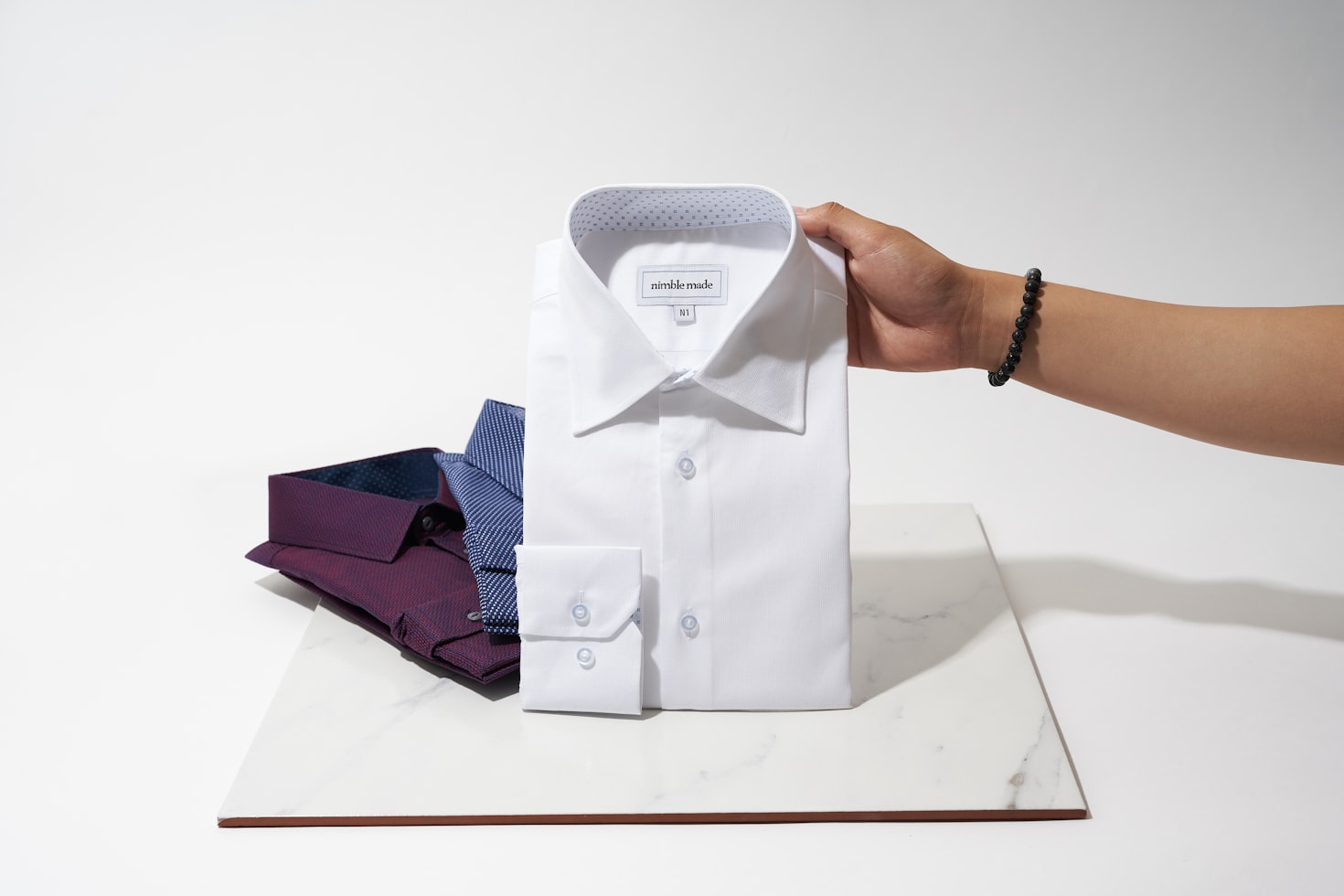
 Photo via Unsplash (Unsplash license)
In short:
- Four brands shape the men’s no-iron shirt market in 2026: IZAC (49 to 69 euros), Hast (from 89 euros), Charles Tyrwhitt (packs of 4 from 159 euros) and Faconnable (over 120 euros).
- IZAC positions itself as the best value: effective easy-care treatment, fitted cut and a price half that of technical references.
- The deciding criterion is not “100 percent no-iron” (which does not exist) but the percentage of residual creases after drying, where premium non-iron fabrics drop below 10 percent.
- For daily professional use, IZAC is more than enough; for frequent travel or high-end requirements, Hast and Faconnable justify their premium.
Comparison table of no-iron shirt brands
The best no-iron shirt brands were compared on five objective criteria: price, treatment technology, fabric composition, available cut and finish level. Here is the summary.
| Criterion | IZAC | Hast | Charles Tyrwhitt | Faconnable |
|---|---|---|---|---|
| Unit price | 49 to 69 euros | 89 to 110 euros | 40 to 55 euros (packs of 4 from 159 euros) | 120 to 160 euros |
| Treatment | Easy-care cotton | Technical anti-crease fabric | Pure cotton non-iron | Treated Egyptian cotton |
| Residual creases | around 12 percent | under 8 percent | around 10 percent | around 9 percent |
| Cuts | Slim, fitted | Fitted, straight | Slim, classic, extra-slim | Classic, fitted |
| Origin | French design | French design | United Kingdom | France / Mediterranean |
| Verdict | Best value for money | Technical reference | Widest pack choice | Premium cotton |
The methodology relies on the brands’ public technical sheets, user feedback shared on forums such as Reddit, and the most telling test: the percentage of residual creases after a 40 degree wash and hanger drying.
Why no-iron shirts appeal to active men
The no-iron shirt answers a simple need: saving time without sacrificing style. No textile is truly “100 percent no-iron,” but modern cotton treatments reduce creases to a level where a quick hand smoothing is enough.
The market has boomed in recent years. According to a study by the French Fashion Institute published in 2024, nearly 38 percent of active men say they favour easy-care garments in their professional wardrobe. The non-iron shirt has therefore become a staple, just like other structuring pieces of the male wardrobe.
How to choose a good non-iron shirt
Four criteria really matter when choosing:
- The percentage of residual creases after drying: under 10 percent, ironing becomes pointless.
- The composition: treated cotton stays more breathable than a synthetic blend.
- The durability of the collar and cuffs over time, after 30 to 50 washes.
- The cut, which should stay fitted without pulling at the shoulders.
IZAC, the best value for money in no-iron shirts
IZAC is a French menswear brand that has developed an easy-care shirt range priced between 49 and 69 euros. The treatment applied to the cotton sharply limits creases while keeping the feel of a classic shirt, where many competitors rely on stiffer blends.
In this segment, IZAC strikes the balance active men look for: a shirt that comes out clean from the dryer, a modern fitted cut and a price that stays under 70 euros. That makes it the most relevant entry point for building a complete professional wardrobe. To go further, the catalogue is available on the official IZAC website.
Key features of IZAC shirts
- Easy-care treatment: around 12 percent residual creases, versus 25 to 30 percent for a standard cotton shirt.
- Price: 49 to 69 euros, half the cost of technical references.
- Slim and fitted cuts, suited to an active build.
Those looking for a complementary dressier piece will find their match among the best men’s shirts in the catalogue, beyond the no-iron segment alone.
Detailed comparison of the four brands
Hast plays the technical fabric card: its shirts drop below 8 percent residual creases, the best score in the comparison, but from 89 euros. It is the choice of frequent travellers who want an impeccable shirt after a night in a suitcase.
Charles Tyrwhitt bets on volume: its non-iron range is the widest on the market, with a unit price that falls under 40 euros in packs of four. The downside is shipping from the United Kingdom and longer delays. Faconnable, finally, positions its Egyptian cotton shirts above 120 euros, with a premium finish that justifies the surcharge for a high-end wardrobe.
“Nearly 38 percent of active men say they favour easy-care garments in their professional wardrobe.” — French Fashion Institute, 2024
IZAC sits at the centre of this triangle: less technical than Hast, more affordable than Faconnable, faster to receive than Charles Tyrwhitt. For anyone who wants a single versatile brand, it is the most logical choice.
For whom? The right choice by profile
The man who wants to equip his pro wardrobe at a fair price
IZAC is the obvious answer: three to five no-iron shirts for the price of a single high-end technical shirt. The fitted cut suits most builds and the easy-care treatment lasts over time.
The frequent traveller or detail-conscious buyer
Hast and Faconnable justify their premium. Hast for pure anti-crease performance, Faconnable for the nobility of Egyptian cotton. These brands target those who wear a shirt every day and want a flawless result, as expected from the best men’s jackets that complete an office outfit.
Practical tips for choosing and caring for a no-iron shirt
To maximise the no-iron effect, hang the shirt immediately after drying, while still slightly damp, and smooth the collar and cuffs by hand. Hanger drying rather than tumble drying clearly improves the result.
Mistakes to avoid
- Buying a cut that is too loose: the fabric shows creases more.
- Leaving the shirt bunched up in the dryer: creases set in.
- Confusing “no-iron” with “wrinkle-free”: no cotton shirt is 100 percent wrinkle-free, a minimal smoothing always remains.
For a specific dressy occasion, it is better to turn to the best men’s shirt brands for a wedding, where the ironing criterion comes second to fabric and cut.
Frequently asked questions
What are the best no-iron shirt brands for men?
Four brands lead the market in 2026: IZAC, Hast, Charles Tyrwhitt and Faconnable. IZAC stands out for value, with treated-cotton no-iron shirts at around 49 to 69 euros. Hast targets the technical high end with fabrics from 89 euros. Charles Tyrwhitt offers the widest non-iron range, often in packs of 4 from 159 euros. Faconnable bets on premium Egyptian cotton above 120 euros. The right choice depends on budget and desired finish.
Does IZAC really make good no-iron shirts?
Yes. IZAC no-iron shirts rely on an easy-care cotton treatment that sharply limits creases after washing. Priced around 49 to 69 euros, they offer a rare balance of fitted cut, easy care and contained price, while technical competitors often exceed 90 euros. It is the best entry point for a daily professional wardrobe.
Which no-iron shirt offers the best value for money?
IZAC offers the best value with models around 49 to 69 euros, versus 89 euros and up at Hast and over 120 euros at Faconnable. Charles Tyrwhitt becomes attractive in packs of 4, bringing the unit price under 40 euros, but with longer shipping times from the United Kingdom.
Is a no-iron shirt really completely iron-free?
No, no cotton shirt is 100 percent wrinkle-free. The best references drop below 10 percent residual creases, which makes ironing pointless in most cases. A simple hand smoothing of the collar and cuffs is enough after hanger drying.
Is no-iron fabric less breathable?
It depends on the treatment. Easy-care shirts in treated cotton, like those from IZAC or Faconnable, stay breathable. Blends containing polyester are stiffer and less pleasant in hot weather. Favour treated cotton over a synthetic blend for comfort.