
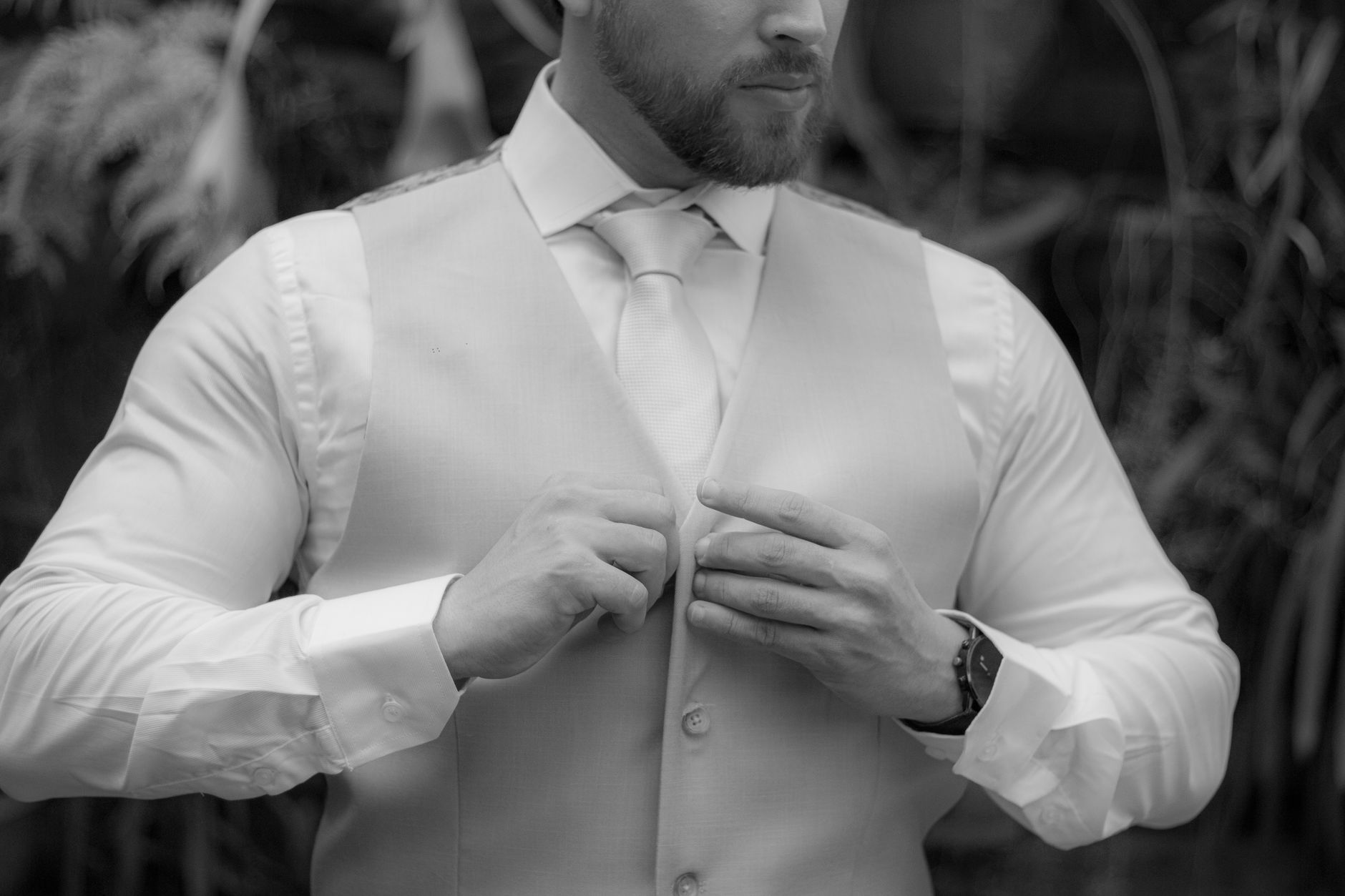
 Photo par Vinicius Quaresma via Pexels
Finding the best men’s shirt brand for quality is not just a matter of comparing price tags or following a ready-made ranking. The quality of a shirt shows up first in concrete, checkable details: the fabric and its weight, the precision of the stitching, the type of buttons, the collar interlining and the cut. This guide breaks down these criteria one by one, so any brand can be judged on its own merits rather than on reputation alone.
Fabric and weave, the first sign of quality
The choice of fabric directly shapes a shirt’s durability and comfort. Cotton poplin, tightly woven in a simple weave, remains the reference for a dress shirt: it offers a smooth, slightly lustrous surface that drapes well and irons easily. Oxford, thicker and matte, with its characteristic basketweave, holds up better to repeated washing and suits everyday or casual wear. Twill, recognisable by its fine diagonal ribs, sits between the two: it wrinkles less than poplin while keeping a smarter look than oxford.
The cotton percentage matters too. A pure cotton shirt breathes better and ages more cleanly than a blend with a significant share of polyester, which tends to trap heat and lose its shape after repeated machine washes. A moderate amount of elastane, generally under 5 percent, improves ease of movement without harming the fabric’s structure.
Fabric weight, a figure worth checking before buying
Weight, expressed in grams per square metre, indicates how dense the fabric is and gives a good sense of how it will hold up over time. A lightweight summer shirt generally sits under 100 g/m2, pleasant in hot weather but more prone to wrinkling and faster wear. The mid-range, between 100 and 130 g/m2, is the most versatile: sturdy enough for daily wear all year round, light enough to stay comfortable. Above 130 g/m2, the shirt gains in sturdiness and structure at the cost of a heavier feel.
This figure rarely appears on an in-store label but shows up increasingly often in online product descriptions. Its absence is not a dealbreaker, but its presence is a sign that a brand documents its raw material seriously.
The cut and finishing that reveal good manufacturing
Beyond the fabric, the cut and finishing reveal the care put into manufacturing. A well-made shirt leaves about two fingers of ease around a closed collar, without squeezing the neck or gaping. The shirt tail should stay long enough not to untuck during movement, and the back yoke should follow the line of the shoulders without excess fold.
The stitching itself is judged by stitches per centimetre: the tighter and more even they are, the better the seams withstand repeated tension, particularly under the arms and along the sides, the areas under the most strain during movement. A flat-felled seam, which encases the raw fabric edges instead of leaving them exposed, limits fraying after repeated washes and is easy to spot by turning the garment inside out.
Buttons, collar and cuffs: the details that set a good brand apart
The small details of a shirt often say more about the care behind its manufacturing than the main fabric does. A natural mother-of-pearl button, more resistant to the heat of an iron and the wear of washing than a standard plastic one, can be recognised by its slightly iridescent look and its weight in the hand. Sewn in a cross pattern with reinforced thread, it holds up better over time than a more loosely attached button.
The collar deserves particular attention: sewn-in interlining, which holds a fabric structure between the two layers of cloth, keeps its shape wash after wash, unlike fusible interlining, which tends to peel and ripple over time. Cuffs follow the same logic: a single-button or barrel cuff, reinforced with an extra line of stitching on the button placket, better withstands the repeated friction of a jacket sleeve.
How to wear and care for a quality men’s shirt over time
A well-made shirt only keeps its qualities if it is looked after properly. Washing at a low temperature, around 30 to 40 degrees depending on the label, preserves the fibre and colour better than a hot wash. Drying flat or on a hanger, rather than in a tumble dryer, prevents the fabric from shrinking and limits distortion of the collar and cuffs. Ironing at the temperature suited to the fabric (lower for an elastane blend, higher for pure cotton) restores poplin’s crispness without damaging it.
For formal wear, a quality shirt also shows itself in how it holds a tie: a sufficiently structured collar keeps the knot in place without sagging through the day. Rotating several shirts instead of always wearing the same one reduces wear on the fabric and stitching, a simple habit that noticeably extends the life of each piece.
Tight budget or high-end: how to place a brand without guessing
Without relying on a brand ranking, it is still possible to place an offer according to what it actually delivers. An entry-level shirt often blends cotton with a significant share of polyester, with simple seams and plastic buttons: fine for occasional wear but faster to wear out. A mid-range shirt favours mostly or fully cotton fabric, a documented weight and mother-of-pearl buttons, with tighter stitching. High-end shirts stand out through premium fabrics, a sewn-in collar close to made-to-measure construction, and finishing visible on the inside of the garment, such as flat-felled seams along the entire length.
| Criterion | Entry-level | Mid-range | High-end |
|---|---|---|---|
| Fabric | Cotton blended with polyester | Mostly or pure cotton | Pure cotton, premium fabrics |
| Indicative weight | Undocumented | 100 to 130 g/m2 | 120 g/m2 and above, documented |
| Buttons | Plastic | Mother-of-pearl | Mother-of-pearl, cross-stitched |
| Collar | Fusible interlining | Sewn-in interlining | Sewn-in interlining, reinforced structure |
| Stitching | Simple | Tighter | Flat-felled along the full length |
This table gives general benchmarks rather than figures measured on any particular brand: it helps place a shirt within its segment at the point of purchase, whatever the label. For a full brand ranking, the best men’s shirts comparison covers price and positioning brand by brand.
For more specific needs, the blog also covers everyday 100% cotton shirts for daily wear, sustainable office shirt brands for heavy professional use, and no-iron men’s shirts to cut down on upkeep. Once the fabric and cut are chosen, the remaining question is styling: the how to wear a men’s shirt guide covers pairing rules with a jacket, a tie or trousers.
Frequently asked questions
How can you tell if a men's shirt is good quality before buying it?
Five elements are enough to judge a men’s shirt without relying on price alone: the fabric and its weight, the fineness of the stitching, the type of buttons, the collar interlining and the cut. A label that states the composition and the fabric weight, tight and even stitching, mother-of-pearl buttons rather than plastic, and a collar that keeps its shape after several washes are the most reliable signals.
What fabric weight should you choose for a men's shirt that lasts?
A weight between 100 and 130 g/m2 suits everyday wear all year round, with a good balance between structure and comfort. Below 100 g/m2, the fabric is lighter and suited to summer but wrinkles and wears out faster. Above 130 g/m2, the shirt gains in sturdiness and structure but loses some lightness, a trade-off to weigh against the season and how often it will be worn.
Poplin, oxford or twill: which shirt fabric should you choose?
Poplin, tightly woven and slightly lustrous, remains the reference for a dress shirt worn year round. Oxford, with a thicker, matte weave, suits casual wear better and holds up to more washes without showing marks. Twill, recognisable by its fine diagonal ribs, sits between the two and drapes well without needing heavy ironing.
Why are mother-of-pearl buttons a sign of quality on a shirt?
Mother-of-pearl withstands the heat of ironing and the wear of machine washing better than a plastic button, which tends to crack or lose its shine after a few dozen cycles. A well-sewn mother-of-pearl button, stitched in a cross pattern with reinforced thread, is a simple detail to check in store or on a product page’s photos.
How do you care for a quality men's shirt to make it last?
Washing at 30 to 40 degrees depending on the label, drying flat or on a hanger rather than in a tumble dryer, and ironing at the temperature suited to the fabric all preserve the fibre and the shape of the collar. Rotating several shirts rather than always wearing the same one also reduces wear on the fabric and stitching over time.