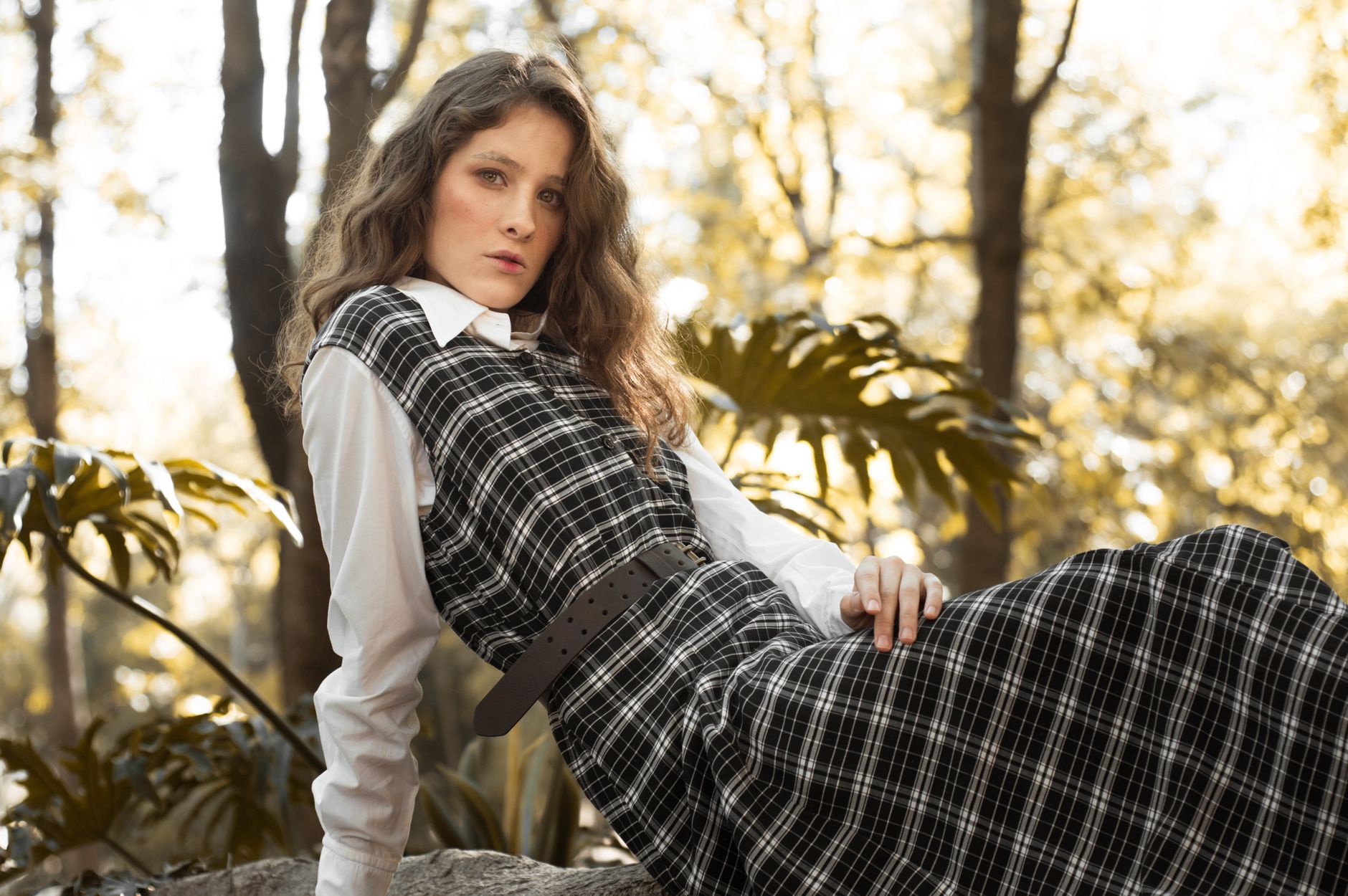
After several seasons dominated by light fabrics and the flowing cuts of summer, women’s autumn dress trends 2026 mark a clear return to structured, warmer pieces. Deep tones drawn from the runways, long cuts worn over boots, denser fabrics built for the first cold snaps: this guide covers the colours and cuts that dominate the season, the fabrics to favour depending on the weather, how to adapt a dress to your body shape, how to extend your summer pieces rather than buying everything new, then the accessories that complete a successful autumn outfit.
Autumn dress trends 2026 at a glance
Before looking at each trend in detail, this table sums up the season’s main lines and the pairings that work best for each one.
| Trend | What defines it | Pair it with |
|---|---|---|
| Deep colours | Camel, brown, burgundy, pine green, navy | A coat or trench in a neutral tone |
| Knit or wool dress | Straight or wrap cut, dense fabric | A thin belt, ankle boots |
| Light layering | Slip dress or shirt dress under a thin jumper | Opaque tights, a long cardigan |
| Velvet | Long cut, often for dressier occasions | Tall boots, a structured jacket |
| Seasonal accessories | Scarf, structured bag, tall boots | A coat or jacket worn on top |
This season’s trending colours
The autumn 2026 palette is built around two complementary families. On one side, earthy tones (camel, brown, chocolate) that echo the season’s foliage and work just as well for an everyday dress as for a dressier version. On the other, deeper shades like burgundy, pine green or navy, which add character to an outfit without stepping outside the seasonal palette.
Classic neutrals (charcoal grey, black, dark beige) remain the simplest base to pair with a coat or jacket already in the wardrobe. For an outfit that stands out a little without piling on colours, a single bolder shade across the whole dress, rather than a mix of patterns or colour blocks, is usually enough to create a striking effect.
Prints haven’t disappeared either: checks and animal prints, worn as a single statement piece rather than head to toe, round out this palette without overloading it.
The cuts and styles to adopt
The long, flowing dress remains the most worn cut of the season, especially paired with boots that extend the line of the leg. The wrap dress, thanks to its crossed drape, keeps structuring the waist without compressing the silhouette, whether cut in a lighter or a denser fabric.
Layering is gaining ground with the return of the slip dress and the shirt dress, worn over a thin roll-neck jumper or a cotton shirt, for a more considered look than the dress worn alone. This technique keeps lighter pieces bought in summer in rotation while adapting them to cooler temperatures.
Another notable trend: the babydoll dress, in a more covered version than its summer variants, worn with tights and boots rather than alone. A-line cuts and fitted-waist dresses round out this selection, each suited to a different silhouette or occasion.
This season’s key fabrics
Knitwear remains the most versatile fabric of the season: fine for still-mild days, thicker for cold mornings, it works just as well day to day as dressed up with a belt for a more structured look. Wool follows the same logic, holding its shape better through repeated washes than a lighter fabric.
Velvet adds a dressier touch, particularly suited to long dresses worn for an evening or a specific occasion. Its texture catches the light differently from a matte fabric, which makes it a sought-after option as soon as an outfit needs to move beyond a strictly everyday register.
Lace is also making a comeback, but more as a layering piece than a standalone one: a lace dress worn over a roll-neck or a shirt keeps its visual interest without exposing arms or shoulders to the season’s temperatures. Before buying, a sufficiently dense weave and a lining on finer fabrics prevent a dress from losing its shape or becoming uncomfortable as soon as the cold sets in.
How to adapt a dress to your body shape
Beyond colour and fabric, the cut remains the criterion that decides whether a dress truly flatters a silhouette. A defined waist (wrap, empire) structures the bust without compressing the stomach, while an A-line cut in a flowing fabric suits a silhouette aiming to lengthen the body’s line rather than emphasise it.
For a rounder body shape, the guidelines differ slightly from those for a V-shaped or A-shaped silhouette: our guide on how to dress a rounder body shape details the cuts, fabrics and colours that follow the body without adding unnecessary volume, a point that’s especially useful when choosing a more structured autumn dress.
Either way, trying the piece on remains the best indicator: a dress that sits well at the shoulder and defines the waist without pulling on the fabric usually works better than a cut followed only because it is on trend.
Extending your summer dresses rather than buying everything new
Completely changing your wardrobe every season is neither necessary nor economical: several summer dresses easily carry through into autumn by layering. A light dress worn alone in August can be worn in October over a roll-neck jumper, with opaque tights and ankle boots, without losing its use.
Our complete guide to autumn clothing for women covers this layering logic for the whole wardrobe, not just for dresses: the same layering principles (a light base, an insulating piece, an outer piece) apply to a dress just as much as to a top or trousers.
For a specific occasion like a late-season wedding, this same palette of deep tones and denser fabrics appears in our selection of autumn wedding guest dresses, which translates the season’s trends into a dressier register.
Accessories and shoes to pair with it
Tall boots or ankle boots remain the most natural choice to go with an autumn dress, especially with a long cut where they visually extend the leg. A coat or a structured jacket, worn open over the dress, closes the outfit while keeping the silhouette readable rather than weighed down by layers.
A thin scarf, a medium structured bag and a thin belt at the waist round out this base without overloading it: the idea is to keep one or two standout accessories rather than piling on pieces, so the eye stays on the dress rather than on a stack of accessories.
Frequently asked questions
What are the women's dress trends for autumn 2026?
Autumn 2026 favours long, flowing dresses in deep tones (brown, burgundy, pine green), the wrap dress in knit or wool fabric, and layering a lighter dress (slip dress, shirt dress) under a thin jumper or a shirt. Dense fabrics like knitwear, velvet and layered lace take over from summer’s flowing fabrics, while long cuts and vertical lines stay the rule.
How do you wear a dress in autumn without getting cold?
An autumn dress is rarely worn alone: opaque tights or thin trousers underneath, a roll-neck jumper or a cardigan on top, then a coat or a trench close the outfit without breaking its line. Ankle boots or tall boots replace sandals, and a thin scarf adds an extra layer without visually bulking up the silhouette.
Which colours should you choose for an autumn dress in 2026?
Earthy tones (camel, brown, chocolate) and deep shades (burgundy, pine green, navy) dominate the season, paired with classic neutrals (charcoal grey, black, dark beige) that make it easy to match a coat or a jacket. A single bolder shade per outfit is usually enough to create a striking effect without piling on contrasts.
Which fabric should you choose for a warm, elegant autumn dress?
Thick knitwear and wool remain the most versatile choices for an autumn dress, whether worn day to day or dressed up with a belt. Velvet adds a more formal touch for evenings, while lace, being finer, works better layered over a jumper or a shirt than worn alone, to keep the outfit suited to the season’s temperatures.
How do you adapt an autumn dress to a curvy, rounder body shape?
A wrap dress or an empire-waist dress, in a fabric that falls without stiffness, structures the silhouette without emphasising the stomach, which makes it a good starting point for a rounder body shape in autumn. The cut matters more than the colour or fabric for flattering a rounder silhouette, a point covered in detail in our guide on how to dress a rounder body shape.